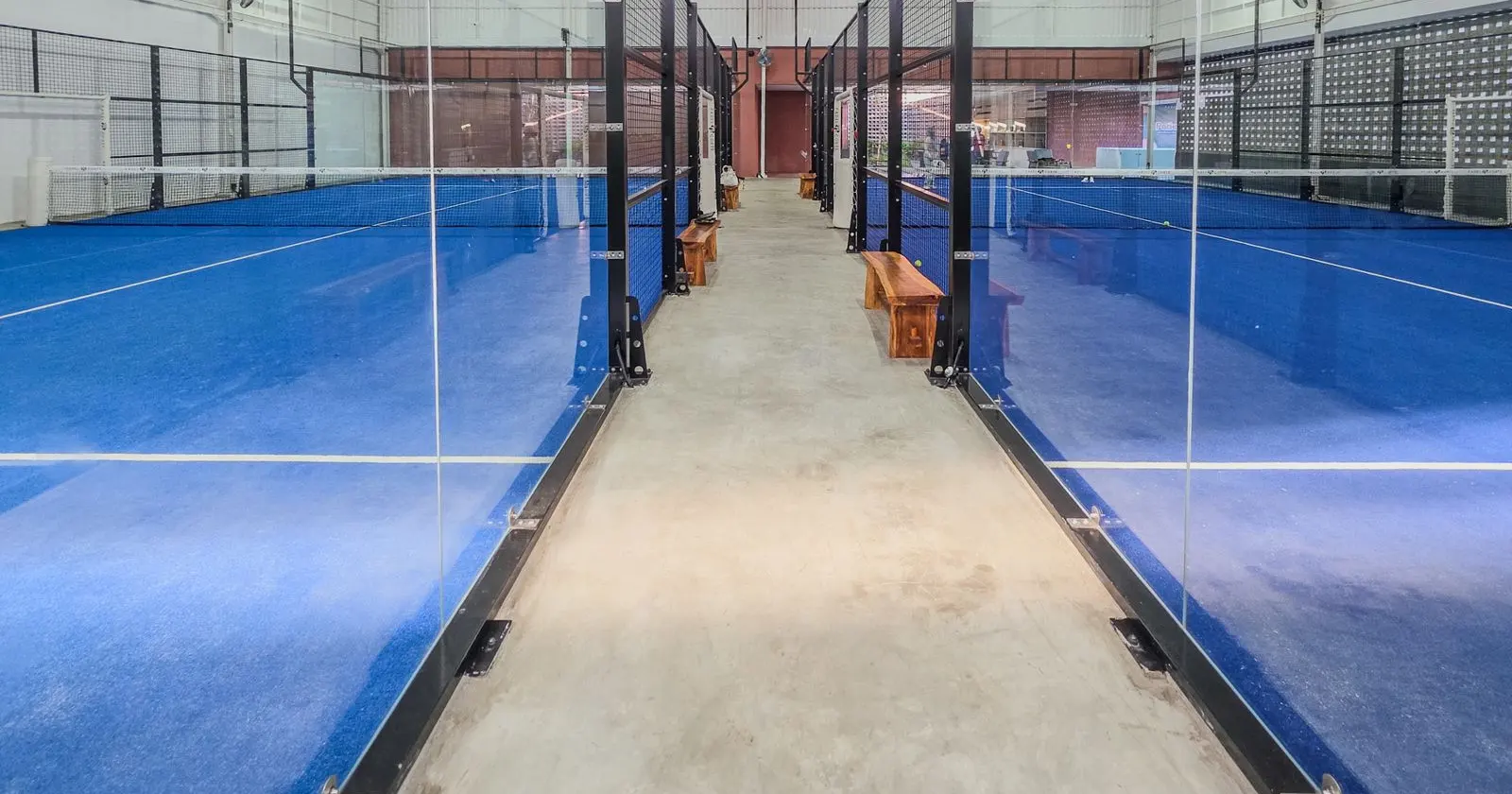
Published · Tennis Padel UK
What is the difference between tennis and padel? Both sports involve rackets, a net and a familiar points system, but they feel quite different to play. Tennis gives you a larger, open court and the choice of singles or doubles. Standard padel is played in doubles on a smaller, enclosed court, where the glass walls can keep a rally alive. Padel also uses a solid, perforated racket and an underarm serve rather than a strung racket and the usual overhead tennis serve.
Neither sport is simply a harder or easier version of the other. Your choice depends on the kind of challenge you enjoy, who you want to play with and what is available locally. If you are already leaning towards the enclosed court, our padel for beginners in the UK guide explains how to prepare for those first sessions. Here, we compare the essentials so you can choose with confidence.
Tennis and padel: the differences at a glance
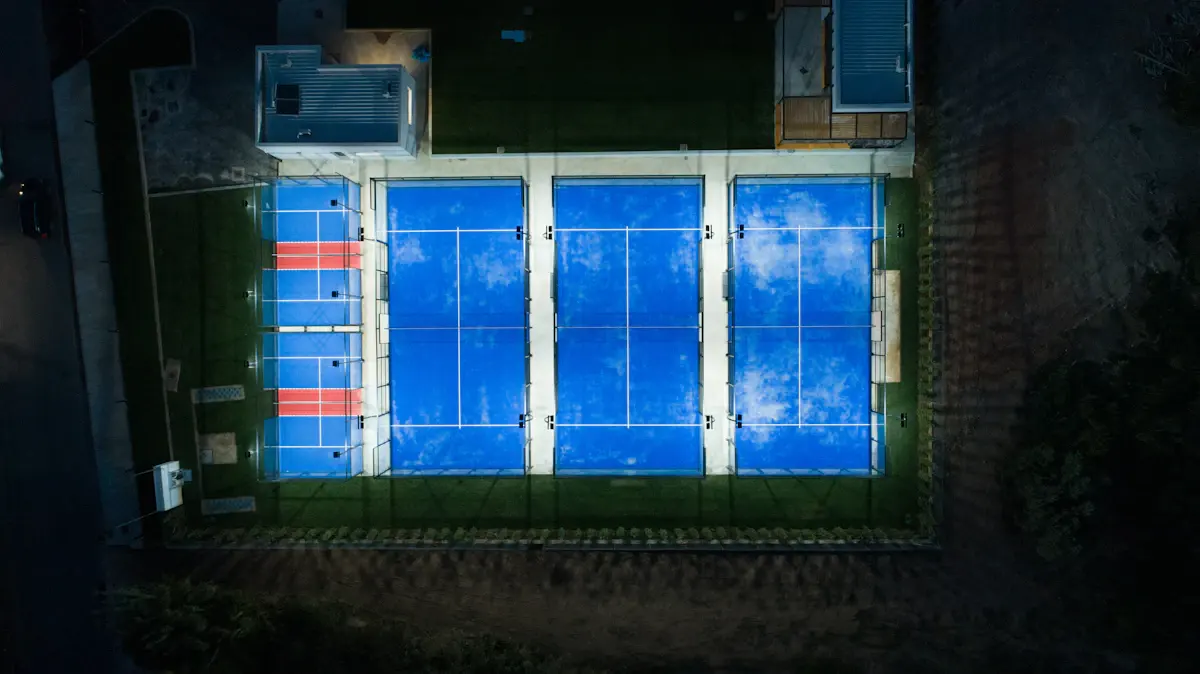
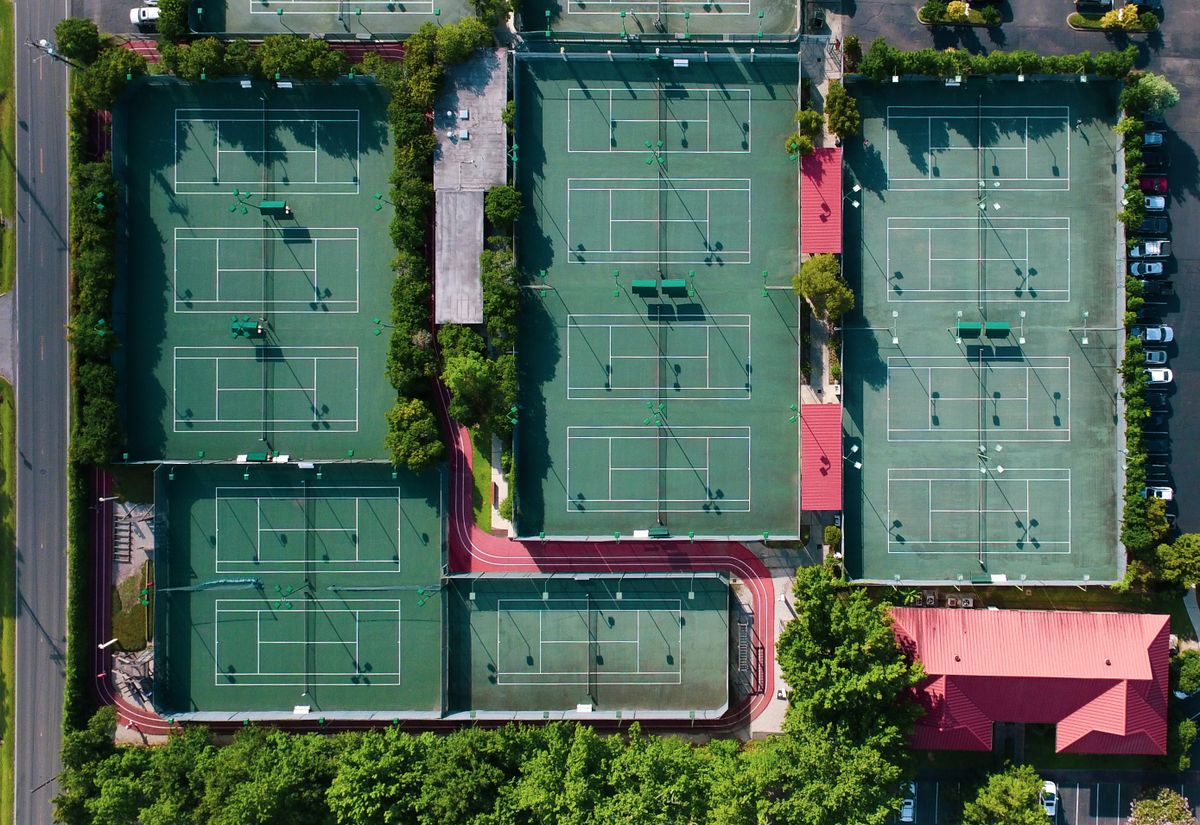
- Court: padel measures 20 metres by 10 metres; a doubles tennis court measures 23.77 metres by 10.97 metres.
- Walls: padel uses glass and mesh as part of play; tennis does not use surrounding fences or walls.
- Players: standard padel is doubles; tennis offers established singles and doubles formats.
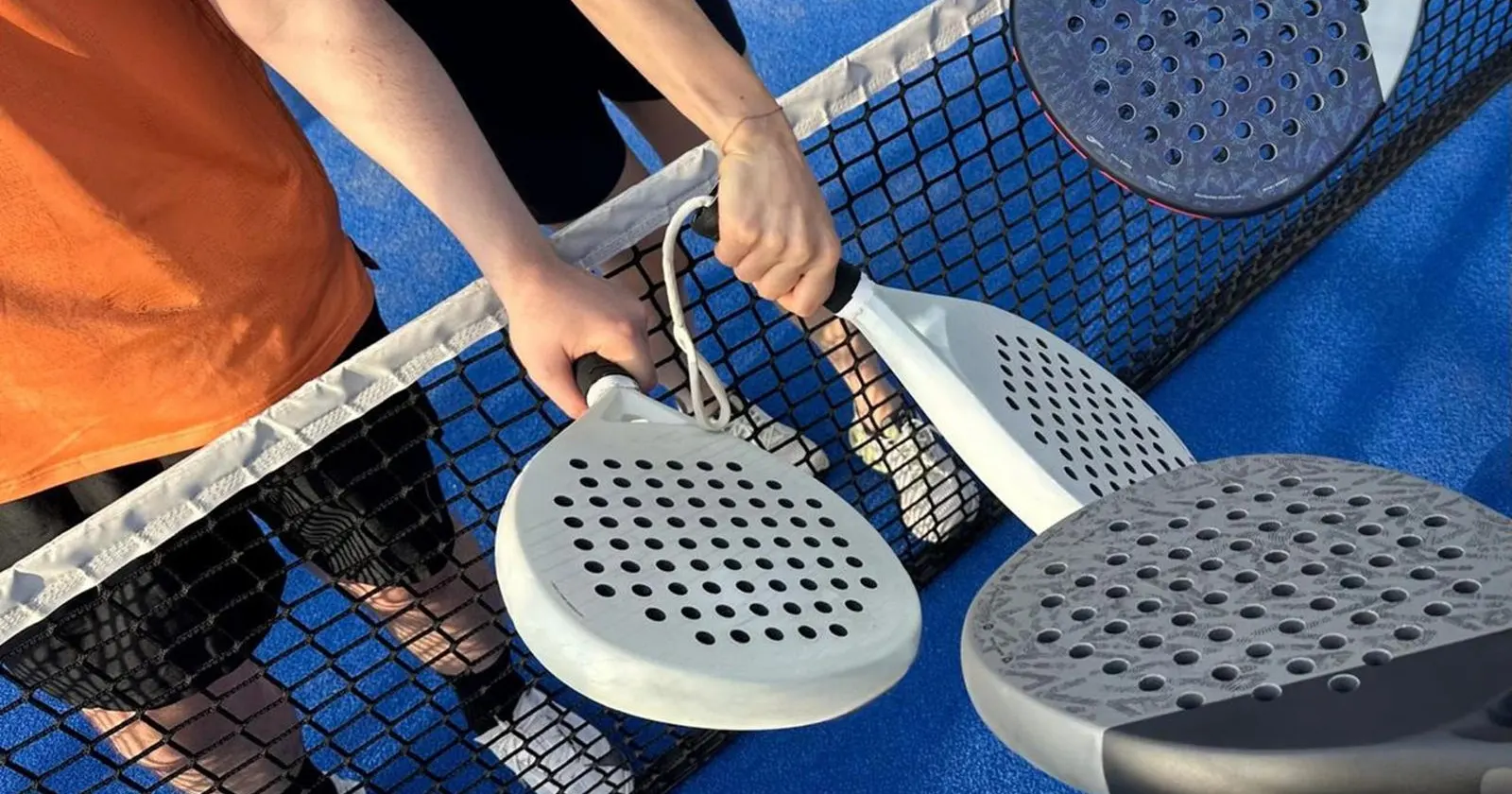
- Racket: tennis uses strings; padel uses a shorter, solid-faced racket with holes and a safety cord.
- Serve: padel requires a bounced, underarm serve; tennis players usually serve overhead.
- Scoring: both use games and sets, although clubs and competitions may use different deciding-point formats.
How the courts compare
A regulation padel court has a playing area of 200 square metres. The doubles tennis rectangle covers roughly 261 square metres. Tennis singles uses the same length but a narrower width of 8.23 metres. These figures describe the marked playing areas, not the total land needed for safe movement, access or construction. Tennis requires additional run-off beyond its lines, while a padel project must allow for its enclosure, entrances and other safety requirements.
That difference matters to players as well as venue owners. In tennis, a deep shot can force you well behind the baseline. A wide shot can pull you outside the doubles tramlines. In padel, the back glass limits that space but introduces another option: let a legal ball rebound and play it as it comes forward. The court is smaller, yet its corners and rebounds create their own demands.
The walls change the whole game
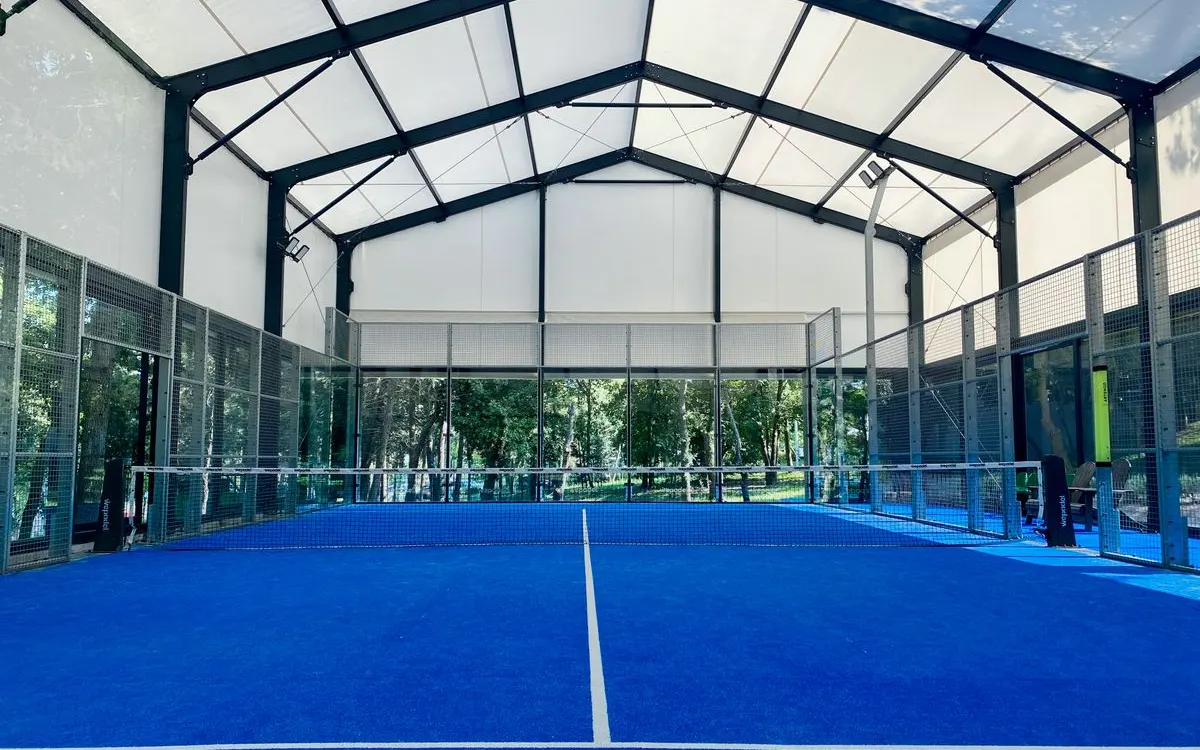
In tennis, a ball that lands outside the correct lines is out. If it reaches a perimeter fence, that fence cannot rescue the point. In padel, a ball may bounce inside the opponents’ court and then hit the glass or, during a rally, the mesh. The receiving team can still return it before a second ground bounce. A ball hit straight into the opponents’ wall or mesh without first bouncing in their court is out.
Think of a padel wall as an extra timing problem, not a second floor bounce. You still have only one bounce on the ground. Sometimes the right decision is to move back, let the ball rebound and then step forward to hit. A tennis player’s instinct to reach every ball before it passes can work against them here. Learning when to wait is one of padel’s most useful early skills.
Rackets and balls are not interchangeable
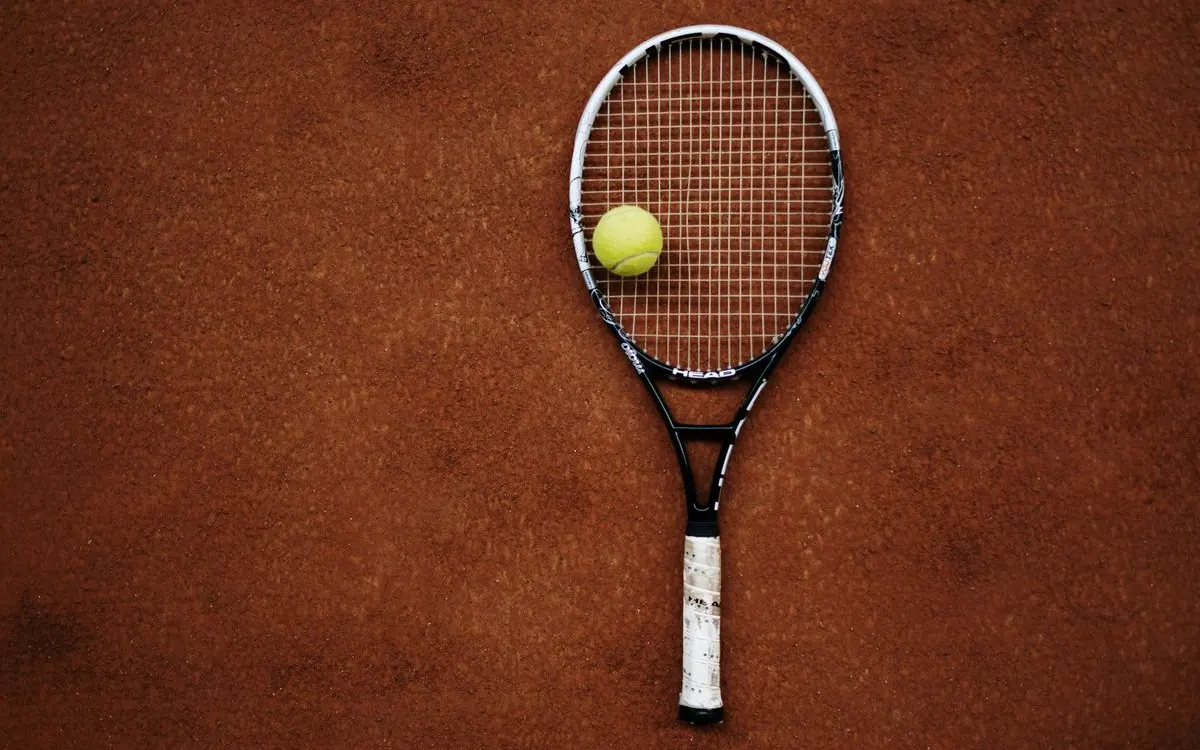
A tennis racket has a strung hitting surface held inside a frame. Players choose string type, tension, head size and weight to suit their game. A padel racket has a solid face with holes, usually over a foam core. It has a shorter handle and different balance options. Its wrist cord is an important safety feature and should be worn correctly throughout play, rather than left hanging from the handle.
Padel balls look much like tennis balls, but their specifications differ and they generally have lower internal pressure. That affects their bounce and response off the racket and glass. Use balls labelled for the sport you have booked. For an introductory session, hiring the correct racket is usually more useful than buying an expensive one unseen. Ask the coach or venue about suitable footwear too: grip should match the actual court surface, not just the sport’s name.
Serving: a different start to every point
The tennis serve is usually an overhead action struck before the ball bounces, although the rules also allow an underarm serve. You serve from behind the baseline into the diagonal service box and have two attempts. Learning a reliable overhead action takes practice. It combines the ball toss, balance, timing and racket movement, which can make the opening shot a major challenge for a new tennis player.
In padel, the serve must be underarm after a bounce, with contact at or below waist height. The server stands behind the service line and sends the ball into the opposite service box. There are two attempts. A serve that lands correctly and then touches the glass can remain valid, but one that hits the mesh before a second ground bounce is a fault. The receiver must let the serve bounce before returning it; they cannot volley it.
Scoring is familiar, but check the format
Both sports commonly count points as 15, 30, 40 and game. A standard set is won by reaching six games with a two-game lead, with a tie-break commonly used at six-all. Under advantage scoring, deuce means a player or pair must win two successive points to take the game. A tennis player therefore has less new vocabulary to learn in padel than the different court might suggest.
Do not assume every social match or competition uses that exact format. Some sessions use a deciding point at deuce, shorter sets or a match tie-break instead of a final set. The organiser’s rules decide. Before the first serve, agree on the scoring, who serves first and how much court time remains. That brief conversation prevents arguments and makes a timed recreational booking much easier to enjoy.
Power, control and positioning
Tennis rewards many styles, from patient defence to aggressive baseline hitting and net play. The open court allows pace, spin and angles to send an opponent into space. Long groundstroke swings can help generate speed, although good timing matters more than simply swinging harder. Singles also places every coverage decision on one player: you must recover and prepare for the next ball without a partner beside you.
In padel, an uncontrolled hard shot may rebound off the glass into a comfortable hitting position for your opponents. Placement and height often matter more than force. Compact swings help in tight spaces, while a well-judged lob can push the other pair back and let you move towards the net. Better players still hit powerful shots, but they choose the moment. Beginners usually improve faster by keeping more balls in play than by chasing spectacular winners.
Singles, doubles and the social experience
Tennis offers a clear choice. Singles suits people who enjoy one-to-one competition and control over their own tactics. Doubles adds teamwork, quicker exchanges near the net and shared court coverage. You can choose the format that fits your available partners and energy. A singles booking needs only two players, which may make regular practice simpler when friends have different schedules.
The standard padel game brings four people together. Partners need to move as a pair, call for balls and avoid leaving large gaps between them. That can make an introductory session sociable, but it also means finding suitable partners matters. A club’s beginner mixer or coached group may be more helpful than an open match with a large skill gap. Ask how sessions are graded before booking.
Which sport is easier for a beginner?
The LTA describes padel as generally easier to learn initially, thanks to its smaller court, underarm serve and more manageable early rallies. That is a useful guide, not a promise for every person. Glass rebounds can feel strange, and four players still need enough control to share a court safely. Good coaching, suitable balls and an appropriate group have a large effect on the experience.
Tennis is also accessible when the session is set up well. A coach can use slower balls, shorter distances and simple rally tasks before introducing full-court play. If you prefer an open court or want singles, do not rule tennis out because its serve looks difficult on television. Judge each sport by a proper beginner session rather than by the professional version. Both offer plenty to learn long after the first successful rally.
Fitness, movement and playing comfortably
Both sports involve repeated starts, stops, turns and changes of direction. Tennis singles can involve covering a large area, while padel often involves short, sharp movements and quick reactions close to other players. Neither is automatically gentle or injury-free. Match intensity, session length, surface, fitness and past injuries all matter. Someone returning after a long break should build up gradually instead of copying a partner’s pace.
Warm up before playing, leave space for your partner and use shoes suited to lateral movement on that surface. In padel, learn to turn and track the ball near the glass without backing blindly into it. Leave advanced out-of-court retrievals to suitable facilities and experienced players. If you have a health concern or ongoing pain, seek individual medical or physiotherapy advice rather than treating a sport comparison as a fitness prescription.
Costs and access in the UK
There is no reliable nationwide answer to which sport is cheaper. Local authority tennis courts, private clubs and indoor padel venues can have very different pricing. Compare the total booking cost, session length, equipment hire, coaching and any membership charge. A padel court price split between four people may look attractive, but a low-cost public tennis court may be better value locally. Check off-peak options and cancellation terms before committing.
Convenience matters just as much as the headline fee. A nearby venue with beginner groups may help you play more often than a cheaper court requiring a long journey. If you are comparing facilities for a club or property project, our tennis and padel court planning guide explains the wider issues beyond the marked court dimensions. Do not assume a smaller playing area makes a construction project straightforward.
How to choose your first session
Choose tennis first if you particularly want singles, enjoy an open court or want to develop a traditional serve and groundstroke game. Choose padel first if an underarm start, wall rebounds and regular doubles appeal to you. If both sound interesting, try an introductory lesson in each. Borrow equipment, play with people of a similar level and notice which experience makes you want to return.
The biggest difference between tennis and padel is not just the glass or the racket. It is how those features change your decisions on every point. Tennis offers space to create and cover; padel asks you to manage rebounds and work closely with a partner. Both reward practice, patience and good company. For more independent guidance on playing, courts and sport-led living, return to tennis padel.