Published · Tennis Padel UK
Padel tends to be explained in one of two ways. Either it is "tennis in a squash court", which is close enough to be unhelpful, or it is presented as a lifestyle trend with a playlist attached. Neither description tells a new player what actually happens in the first hour on court, why the walls feel so strange, or what to buy and what to ignore. This guide is written for people in the UK who have booked, or are about to book, their first few sessions and want to arrive knowing enough to enjoy them.
If you already know you want help finding a venue near you, or you are weighing up a club membership, our playing and venues guidance explains how we can point you in the right direction. Otherwise, read on: the fundamentals take a little longer to absorb than most people expect, and they are worth getting right early.
What padel actually is
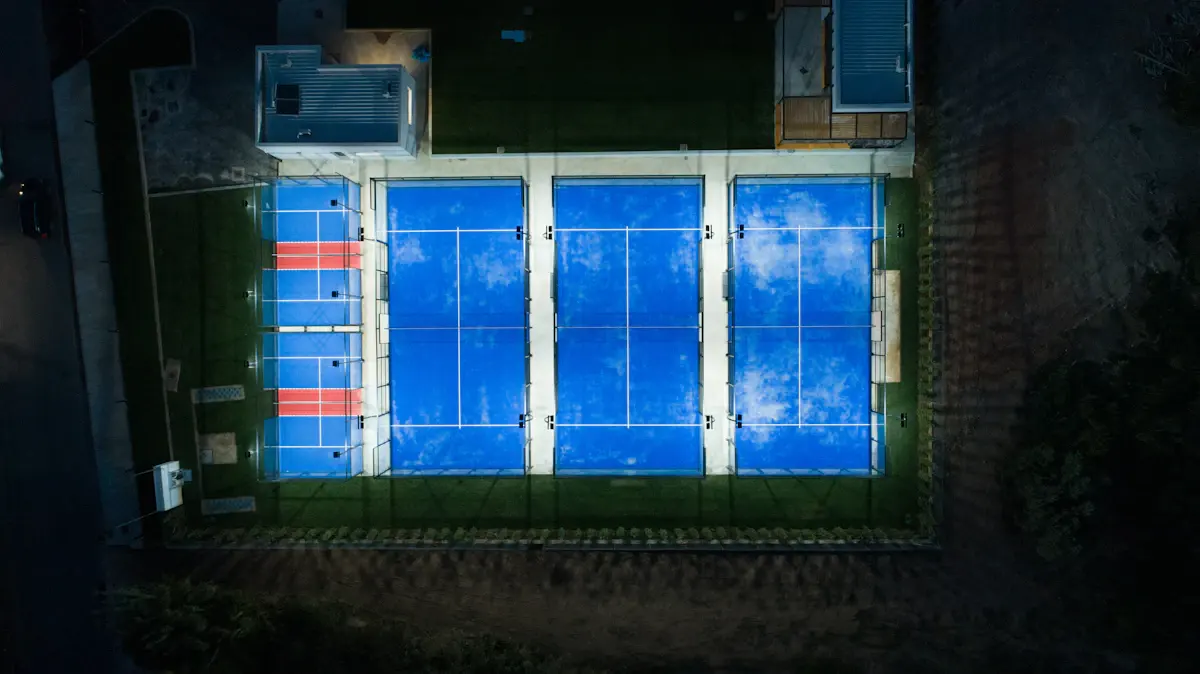
Padel is a racket sport played almost always in doubles on an enclosed court roughly 20 metres long and 10 metres wide. That is noticeably smaller than a tennis court, which is one reason rallies feel continuous rather than stop-start. The back walls are usually glass, the sides are a mix of glass and metal mesh, and a net divides the court in the middle. Players use a solid, stringless bat with a perforated face and a ball that looks like a tennis ball but runs at slightly lower pressure.
The essential difference from tennis is that the ball is allowed to bounce once on the ground and then hit the walls before you play it. That single rule changes everything. Instead of chasing balls that have gone past you, you learn to wait for them to come back. Instead of trying to finish every point with power, you learn that the walls punish pace that is not well directed. The sport rewards patience, positioning and partnership more than raw athleticism, which is why so many people who never got on with tennis find themselves hooked.
The rules you need on day one
You do not need the full rulebook to start, but a handful of rules come up in every match. Learning them before you arrive saves a lot of awkward pauses.
- The serve is underarm. You bounce the ball behind the service line and strike it at or below waist height, diagonally into the opposite service box.
- The serve must bounce in the box. If it then hits the side mesh before the receiver plays it, it is a fault. If it hits the glass, it is in play.
- You get two serves per point, as in tennis.
- In open play, the ball must bounce on the ground on your side before touching any wall, unless you volley it first.
- After a bounce, the ball can hit one or more walls on your side and you can still return it, as long as it has not bounced twice.
- You may play the ball against your own walls to get it back over the net. You may not hit it directly into the opponents' walls without it bouncing first on their side.
- If the ball touches you or your partner, the point is lost.
Scoring follows tennis: 15, 30, 40, game, with sets to six games and tie-breaks at six-all. Many recreational groups and some competitions use a "golden point" at deuce, where the receiving pair chooses which side receives and the next point wins the game. It keeps matches moving and is worth agreeing before you begin.
Your first hour: what to expect on court
Most beginners spend their first session being surprised by the back glass. The instinct, especially for anyone with a tennis background, is to hit the ball before it reaches the wall. Resist it. Let the ball bounce, let it come off the glass, then step towards it and play it gently forwards. The coach phrase you will hear most is "let it come", and it is good advice.
The second surprise is how close everyone is. Four people in a 200 square metre box means communication matters. Call "mine" or "yours" early, especially on balls down the middle. A widely used convention is that the player whose forehand covers the middle takes it, but agree with your partner before the first game.
The third surprise is the score. Points can be long and they swing quickly. A pair who has been defending for twenty shots can win the point with one well-timed lob that sends the net players scrambling. This is part of the appeal: nobody is ever entirely out of a rally.
Kit: what matters and what can wait
The bat
Most venues hire bats, and for your first few sessions that is the sensible route. When you do buy, beginners generally benefit from a round head shape, which puts the sweet spot lower and closer to the hand, and a softer core material, which gives more forgiveness on off-centre contact. Diamond-shaped bats with a high balance point are designed for players who hit hard overheads and can control the extra leverage; they are less kind to developing technique and to elbows. Weight is a personal preference, but lighter is easier to manoeuvre at the net.
Shoes
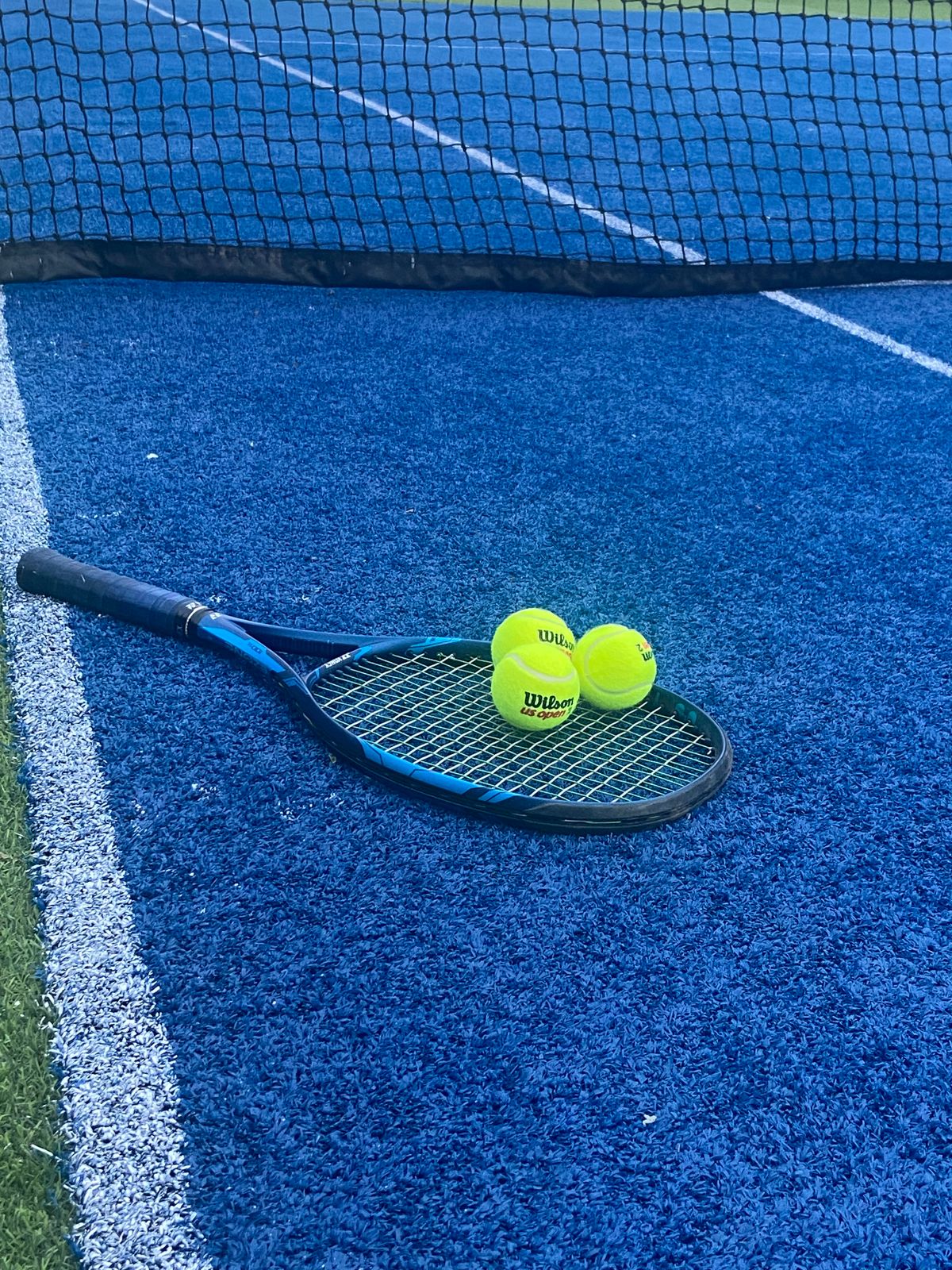
If you buy one item, buy proper court shoes. Most UK padel courts use artificial grass with sand infill, and the movement is full of short lateral steps and quick stops. Running shoes are built for forward motion and can roll on the side of the foot. Padel-specific shoes often have a herringbone or combined sole that grips sand-dressed turf without sticking. Clay-court tennis shoes are a reasonable alternative if you already own a pair.
Balls and everything else
Padel balls lose pressure quickly once a tube is opened, so bring a new tube to social games if it is your turn. Beyond that, a sweatband, a water bottle and comfortable clothing are enough. Protective eyewear is worth considering, particularly in fast doubles at the net, and some clubs recommend it for juniors.
Technique foundations that pay off later
Padel technique is compact. Swings are shorter than in tennis, wrists are firmer, and the bat face is usually slightly open to impart backspin, which keeps the ball low after it bounces and reduces how far it carries off the glass. A few habits are worth building from the very start.
- Keep the bat up in front of you between shots. The ball arrives quickly and there is rarely time to lift it from your knees.
- Turn your shoulders rather than swinging your arm. A small turn gives you control and direction.
- Prefer placement over pace. A slow ball to the feet of an opponent at the net is usually more effective than a hard ball that bounces off the back glass into their comfort zone.
- Learn the lob early. It is the main tool for moving opponents away from the net and taking it for yourself.
- Move as a pair. Partners should advance and retreat together, roughly side by side, so no gap opens down the middle.
The overhead deserves its own warning. New players often try to smash every high ball. In padel, a hard smash that bounces near the middle of the court will come off the back glass into the perfect hitting zone for your opponents. Most high balls are better played as a controlled overhead aimed deep, which is known as a bandeja, keeping your position at the net. Save the full smash for balls that are short and high enough to put out of reach.
Finding a court and a game in the UK
Padel facilities in Britain sit in a few broad settings: dedicated padel clubs, often with several covered or indoor courts; tennis clubs that have added one or two padel courts; leisure centres and multi-sport venues; and courts attached to hotels, holiday parks and private estates. Each has a different feel and booking model.
The Lawn Tennis Association, the governing body for padel in Great Britain, publishes a guide to getting started and a padel court finder, and both are a good first stop. Many venues use online booking platforms, and several of those platforms let you join open matches organised by skill level. Club-organised beginner sessions, sometimes called intro sessions or "padel 101", are an excellent way to learn the rules with a coach and meet others at the same stage.
When you compare venues, think beyond the hourly price. Consider whether the courts are covered, which matters a great deal in a British winter; whether there is coaching at your level; whether there is a social ladder or league that makes it easy to find partners; and how far you are realistically prepared to travel on a weeknight. A slightly more expensive court twenty minutes away that you actually use is better value than a cheaper one you never book.
Etiquette: the unwritten part
Padel culture is friendly, but it runs on a few shared expectations.
- Arrive a few minutes early and be ready to leave the court promptly when your slot ends. Bookings run back to back.
- Agree the level of the game beforehand. Mixed-ability games are fine if everyone knows what to expect.
- Do not walk behind a court during a point. If you must cross, wait for the rally to end.
- Call your own lines and walls honestly, and give the benefit of the doubt to opponents on close calls.
- If a ball rolls onto your court from a neighbouring one, stop play and return it at a natural break.
- Rotate who brings new balls, and settle court fees quickly. It sounds trivial, but it keeps groups together.
A realistic first-season plan
Improvement in padel is quick at first and then plateaus while your positioning catches up with your hands. A simple structure helps.
In the first month, aim for one coached session per week and one social game. The coached session builds technique around the walls; the social game gives you context. Keep notes on which shots felt awkward. In months two and three, keep one lesson every fortnight and add a second game each week. Focus on returning serve consistently and on moving with your partner. By the end of the first season, many players are comfortable in open matches at a beginner-intermediate level, and some begin playing in friendly club leagues.
Two cautions. First, padel is gentler on the body than some sports but it is not risk-free: calves, shoulders and elbows take strain from sudden movement and overheads. Warm up properly and build frequency gradually. For context, the NHS physical activity guidelines suggest adults aim for at least 150 minutes of moderate or 75 minutes of vigorous activity a week, plus strengthening activities on two days; how much a padel session contributes depends on its intensity and on you. Second, avoid buying an expensive, stiff bat because a stronger friend uses one. Equipment should match your game as it is now, not as you hope it will be.
Tennis players: what transfers and what does not
Tennis players usually progress quickly because their timing, footwork and net instincts transfer well. The volley in particular is very similar. What does not transfer is the big topspin groundstroke and the habit of hitting through the ball. In padel, heavy topspin sits up off the glass and gives opponents an easy ball. Expect to spend a few sessions unlearning, and treat the back wall as a teammate rather than an obstacle.
Squash and badminton players have a different advantage: they read rebounds and use wrist control naturally. They often need help with positioning at the net and with the pace of the ball in open court. Whatever your background, the common thread is that padel rewards the player who chooses the right shot rather than the hardest one.
Juniors, families and later starters
Padel can be accessible across a wide range of ages, although it will not suit everyone and anyone with health concerns should take advice before starting. Children can rally sooner than in tennis because the court is smaller and the walls keep the ball in play, and many clubs run junior sessions with appropriate equipment. At the other end of the spectrum, a large share of new players are in their forties, fifties and beyond, attracted by doubles play, short court distances and the social side. If you are a later starter, a coach who understands joint load and gradual progression is worth seeking out.
For families, the shared-court format can be a genuine advantage. Two adults and two older children can play a competitive, enjoyable game in a way that is harder to achieve on a full tennis court. That is one reason padel courts are increasingly considered as part of homes, holiday lets and estates, a subject we explore in our guide to tennis and padel real estate.
Weather, seasons and the British reality
Outdoor padel in the UK is perfectly playable much of the year, but rain affects grip on artificial grass and wet glass makes the ball skid. Wind, too, plays havoc with lobs. Covered and indoor courts are therefore valuable, and many players keep outdoor sessions for spring and summer, then switch to covered venues in winter. If you are choosing a regular club, check whether winter bookings on covered courts are available to members first, as demand often peaks in the darker months.
Common beginner mistakes, briefly
- Hitting before the ball reaches the glass because it feels safer.
- Standing too close to the back wall and getting crowded by the rebound.
- Both players drifting to the same side, leaving the middle open.
- Smashing every high ball rather than playing a controlled overhead.
- Staying at the back all game. The net is where padel points are usually won.
- Buying a bat that is too stiff or too head-heavy too early.
Where to go next
Once you have a few sessions behind you, the most useful next step is regular play with people slightly better than you, plus occasional coaching to correct habits before they set. If you find yourself thinking about courts beyond your local club, whether that is adding a court to a property or understanding what venues cost to run, our guide to planning a tennis or padel court in the UK covers the practical stages in detail.
And if you would simply like a hand finding the right venue, coaching structure or playing group for where you live, you can send us an enquiry. We will be clear about what we can help with, and honest when a local club or coach is a better first call than we are.