Published · Tennis Padel UK
For a certain kind of buyer, the court is the house. The kitchen and the bedrooms matter, of course, but the image that stays after a viewing is the green or blue rectangle beyond the lawn, the sound of a rally on a summer evening, friends arriving with rackets. Sport-led property is about that image, and about whether the reality behind it will hold up over years of ownership.
This guide is for people in the UK thinking about buying a home with its own tennis or padel court, a property close to a strong club, or a holiday or second home where play is part of the plan. It is also useful for owners wondering how a court affects the way they present and sell a property. If you would like to talk through a search or a property you are considering, our property and lifestyle guidance explains how we can help. We do not list properties for sale or act as an estate agent, and we will not quote values or prices.
Three ways to build a sporting life around a home
Most sport-led property decisions fall into one of three patterns, and being clear about which one you are pursuing saves time.
- A home with a private court. Maximum convenience and privacy, but full responsibility for upkeep, and a narrower pool of comparable properties.
- A home near an excellent club. Access to coaching, competition, a playing community and often both tennis and padel, without the maintenance burden. Membership availability becomes the critical question.
- A development or estate with shared sports facilities. Courts maintained through a service charge or estate management arrangement, with rules on booking and use.
Many buyers start out wanting the first and end up happier with the second. A private court is wonderful if it gets used; a busy club gives you partners, coaching and a reason to play when the household is not in the mood. Be honest about how often you play now, with whom, and whether that is likely to change.
Judging a court on a viewing
Estate agents' photographs tend to show courts at their best: freshly cleaned, in sunshine, from a flattering angle. On a viewing, look more closely. You do not need to be a surveyor to spot the warning signs.
Surface condition
Walk the court. Look for cracks, ridges or depressions in hard courts, which can indicate base or drainage problems. On artificial grass, look for worn areas around the baseline and service line, flattened pile, compacted or missing infill, and moss or algae, especially in shaded corners. Ask when the surface was laid, by whom, and whether any guarantee remains. Ask for records of maintenance and recoating or resurfacing.
Drainage
If you can, view after rain. Standing water an hour or two after a downpour suggests drainage issues that may be costly to resolve. Look at perimeter drains and channels: are they clear, or full of leaves and silt?
Enclosure, nets and lighting
Check fencing for rust, sagging, gaps and loose panels. On padel courts, examine glass panels for chips or cracks and the steel frame for corrosion, particularly at the base. Look at net posts and winding mechanisms. If there is floodlighting, ask to see it working, and ask whether there are restrictions on the hours it can be used.
Orientation and setting
Note which way the court faces and where the sun will be at the times you are most likely to play. Look at surrounding trees: they create shade and leaf fall that affect surface life. Consider what the court looks like from the house and from neighbours, and whether it would bother you, or a future buyer, if you stopped playing.
Consents and paperwork
A court, its fencing, its lighting and any cover or building may have required planning permission or other consents when they were built. Your conveyancer should check this as part of the purchase. The GOV.UK guidance on planning permission notes that new buildings, major changes and changes of use are likely to need permission and that the local planning authority can confirm; Scotland and Northern Ireland have their own systems.
Ask specifically about planning conditions attached to any permission. Floodlit courts are often subject to limits on lighting hours; some courts have conditions on use, noise or landscaping. A beautiful lit court that may only be used until a fixed evening hour is a different proposition from one with no restrictions. If a court appears to have been built without required consent, take legal advice before proceeding.
Other questions worth raising through your conveyancer include whether the court sits within the title boundary, whether any rights of way or easements cross the area, whether trees nearby are protected, and whether the property is in a conservation area, which may affect future changes such as adding padel or a canopy.
The running costs nobody photographs
Every court needs care. Typical recurring items include cleaning and moss treatment, brushing and topping up infill on artificial grass, recoating or resurfacing hard courts over time, net and post replacement, fence and glass repairs, lighting maintenance and electricity, and leaf clearance in autumn. Some owners use a specialist maintenance contract; others manage it themselves with occasional professional visits.
We do not quote typical costs because they vary so much with surface, setting and use. Ask the seller what they have spent, request invoices where possible, and seek a quotation from a court maintenance specialist for an inspection before you commit. If the surface is near the end of its life, factor its replacement into your thinking.
Does a court add value?
This is the question owners and buyers most often ask, and the honest answer is "it depends". A court tends to be most valued where it fits the property and its likely buyers: larger family homes and country houses where outdoor space is generous and buyers expect leisure facilities. In those settings, a well-kept court can help a property stand out. In smaller gardens, or where a court takes space buyers would prefer as lawn, it may appeal to a narrower audience.
Condition matters as much as existence. A court in poor repair can count against a property because buyers mentally deduct the cost and disruption of putting it right. If you are selling, investing in cleaning, minor repairs and clear documentation of permissions and maintenance is usually more persuasive than any description.
Treat any claim that a court automatically adds a fixed percentage or sum to value with caution. A RICS-regulated valuer or an experienced local agent can give a property-specific view.
Location: club culture and catchment
If you are pursuing the "near a great club" route, research the club as carefully as the house. Look at membership categories, joining arrangements and whether there is a waiting list. Ask whether the club offers both tennis and padel, how courts are booked, whether covered or indoor courts exist for winter, and what coaching and junior programmes run. Visit at a busy time to sense the atmosphere.
The LTA's padel court finder is a useful way to see where padel is available, and checking club websites and visiting in person will tell you more than any listing can. Think about the practical journey: a club ten minutes away on a quiet road will be used far more than one forty minutes away in traffic.
Adding a court after you buy
Some buyers choose a property with space for a court rather than one with a court already built. This gives control over type, surface and placement but brings the full planning and construction process. Before buying on this basis, look at the site with the questions in our guide to planning a tennis or padel court in mind: size, levels, ground, trees, access, neighbours and likely consent. Where possible, seek informal advice from a specialist or the local planning authority before exchange, so that the plan is grounded in reality.
Holiday homes and lettable courts
Courts are also attractive features for holiday lets and second homes, both for the owner's own use and for guests. If you intend to let, consider safety, supervision, insurance, booking rules and wear from heavier use. Check the terms of any planning permission and your mortgage and insurance arrangements, and take advice on the tax treatment of furnished holiday or residential lets, which has changed in recent years. Where a court is shared with guests, clear rules and maintenance become even more important.
Overseas sporting property
Many UK players look abroad for a sporting second home, particularly where padel is long established and outdoor seasons are longer. Buying overseas brings its own legal, tax and practical considerations, and local independent legal advice in the country concerned is essential. Our wider team, through Spot Blue International Property, has long experience of international property, and if your interest extends beyond the UK we can talk through the questions you should be asking.
Taxes and costs of purchase
Stamp Duty Land Tax in England and Northern Ireland, Land and Buildings Transaction Tax in Scotland and Land Transaction Tax in Wales apply to property purchases, with different rates and surcharges for additional homes. Mixed-use or non-residential elements can, in some circumstances, change the position. Take advice from your conveyancer or a tax adviser, and use official guidance such as GOV.UK on Stamp Duty Land Tax as your starting point.
Selling a home with a court
If you are on the other side of the transaction, the same scrutiny applies in reverse. Assemble the paperwork a careful buyer will ask for before you list: planning permissions and any conditions, building or installation records, guarantees, maintenance invoices and details of the lighting system. A short, factual information sheet on the court, covering its age, surface type, when it was last cleaned or resurfaced and any restrictions on use, helps buyers and their advisers move quickly and reduces the risk of late renegotiation.
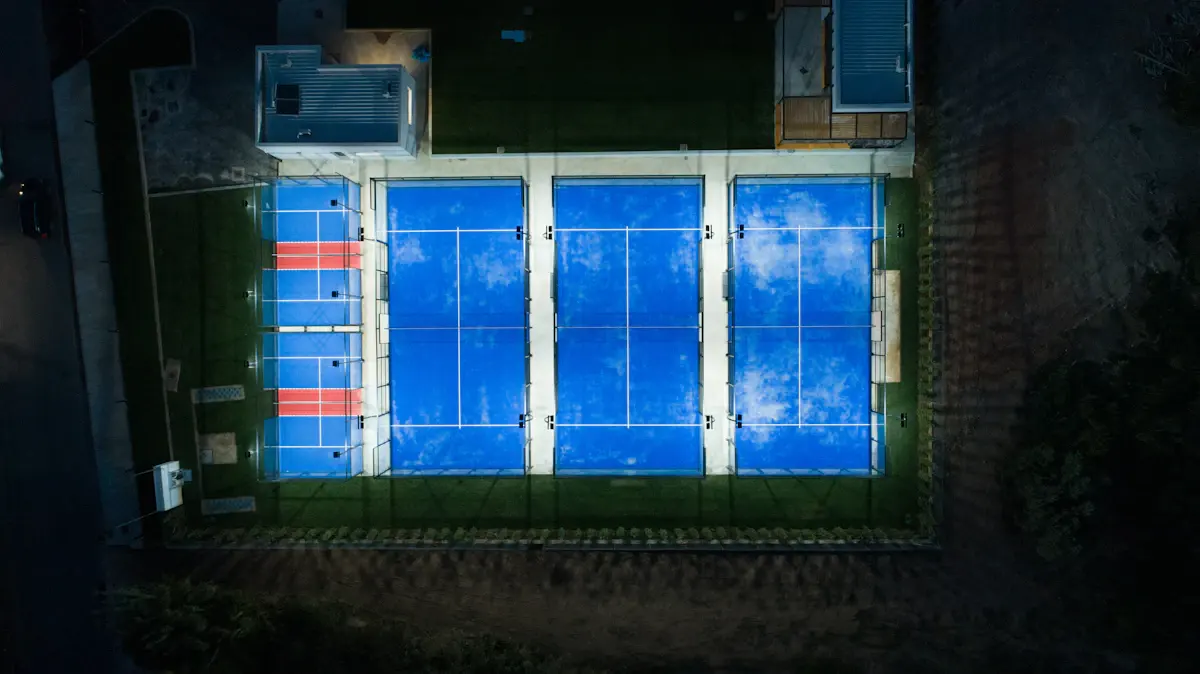
Presentation matters too. Clear leaves and moss, repair loose fence panels, replace a tired net and make sure lights work. Photograph the court in good light from angles that show how it relates to the house and garden, and consider an evening image if it is floodlit and permitted for evening use. Be accurate in descriptions: overstating a court's condition or omitting a lighting restriction is likely to surface during the buyer's enquiries and can damage trust in the wider sale.
Health, play and realistic expectations
A court can make regular activity easier, but it does not guarantee it. The NHS physical activity guidelines suggest adults aim for at least 150 minutes of moderate or 75 minutes of vigorous activity a week, plus strengthening on two days. Whether tennis or padel helps you get there depends on how often and how intensely you play, singles or doubles, and your own health. A home that makes play convenient is a genuine advantage; it works best when matched to habits you already have.
A buyer's checklist
- Which model fits you: private court, nearby club or shared facility?
- Age, maker and maintenance history of the court surface.
- Drainage performance after rain and condition of perimeter drains.
- Condition of fencing, glass, frame, posts and nets.
- Lighting operation, and any limits on hours or use.
- Planning permissions and conditions for the court, lighting and structures.
- Title boundaries, rights of way, protected trees and conservation area status.
- Recurring maintenance costs and a specialist inspection quote.
- Club options nearby, membership availability and travel time.
- How the court affects resale appeal for the likely buyer of this property.
Keeping the dream and the detail together
The appeal of sport-led property is real. A court can shape a household's weekends, bring friends together and offer a daily reason to be outside. The best purchases keep that picture in view while giving the court the same scrutiny as the roof, the boiler and the title. If you are curious about the game itself before committing, our padel beginner's guide is a good place to start.
If you would like an informed conversation about a search, a specific property or the practicalities of adding a court, send us an enquiry. We will tell you plainly what we can help with, and which independent professionals you should involve.