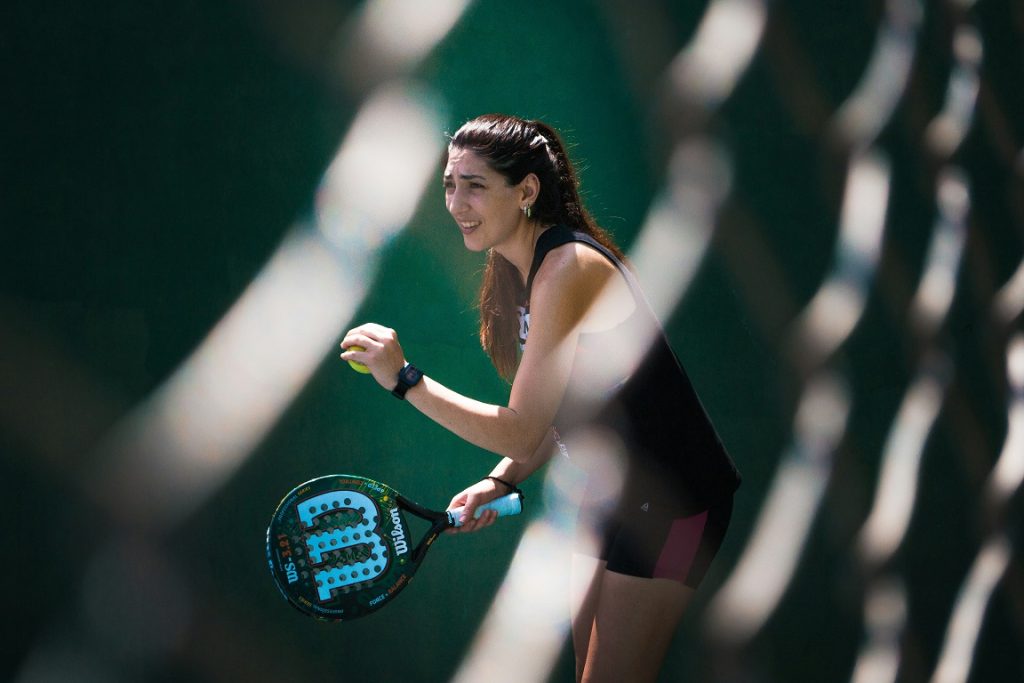
Decathlon Premier Padel P1 Marks Strategic Watershed for Global Padel
In a continent grappling with economic headwinds, uncertain retail forecasts, and ongoing debates over the future of commercial sport, the Decathlon Premier Padel P1 tournament in Rotterdam offered a striking contrast—one of upward momentum, partnership innovation, and undeniable consumer energy.
Held at the Rotterdam Ahoy Arena in August 2025, the tournament not only drew record-breaking crowds for a P1 event in Western Europe but also served as a barometer for the economic maturity of padel as a commercial and cultural force. Anchored by French sportswear behemoth Decathlon, the event brought together elite athletes, global sponsors, national broadcasters, and local government, all convening around one reality: padel is no longer a novelty—it is a market-ready ecosystem.
And Rotterdam, it turns out, is where the serve landed with the loudest echo.
A Tournament Beyond Trophies
The Decathlon Premier Padel P1 was, on the surface, a classic showdown of athletic prowess. Power duos like Coello–Tapia and Galán–Chingotto clashed in high-stakes matches that thrilled an audience increasingly literate in the sport’s unique mix of aggression and strategy.
Yet behind the scoreboard lay a more compelling narrative. This was not merely a tournament. It was an economic showcase.
Over £3.4 million in direct spending was generated by the event, according to preliminary figures from the Dutch Sports Federation.
Venue ticketing topped £950,000, with average attendance per session hitting 5,400 spectators.
Merchandise and equipment sales surged by 22% in the Rotterdam metro region during the event week.
These figures do not exist in a vacuum. They reflect the wider trajectory of padel as a strategic sporting asset for cities, retailers, and sports federations alike.
Decathlon’s Involvement: Retail Meets Infrastructure
When Decathlon affixed its name to the Rotterdam P1, it wasn’t simply indulging in brand visibility. It was signalling a strategic pivot—from product-centric retail to ecosystem integration.
Decathlon has been testing proprietary padel courts in key European urban centres since late 2023, including pilot locations in Barcelona, Lyon, and Manchester. The Rotterdam P1 sponsorship formed part of a larger initiative called “Project Racketframe”, which aims to create supply chain control from manufacturing, through distribution, to venue-level brand experience.
In plain terms: Decathlon doesn’t just want to sell rackets. It wants to own the sport’s growth curve.
The economics are compelling. A Decathlon-branded padel court costs roughly £39,000–£50,000 to install, yet yields recurring revenue through equipment sales, apparel bundles, and mobile app usage. Rotterdam was a field test of this strategy at scale.
According to one senior executive, the event offered “live validation” of their direct-to-consumer model, generating 18% uplift in padel sales across Benelux markets during the tournament window.
Padel in Rotterdam: A City Strategy
Rotterdam is no stranger to reinvention. From maritime hub to design capital, the Dutch port city has long seen itself as a testbed for urban modernity. Its embrace of padel fits neatly within its portfolio of innovation.
The city’s economic development board co-funded aspects of the tournament infrastructure, leveraging padel as a post-COVID recovery strategy for both sport and tourism. Pop-up courts were installed in strategic locations including Schouwburgplein and Binnenrotte, offering free community play alongside coaching clinics.
The response was emphatic:
More than 3,200 Rotterdam locals tried padel for the first time during the tournament week.
Local clubs reported a 38% spike in bookings over the prior month.
Youth participation surged, with over 450 under-18 players enrolling in follow-up clinics.
In a city where health equity and public engagement are embedded in policy, padel now represents a real tool in the civic playbook.
Institutional Backing and Global Legitimacy
It’s important to contextualise the Rotterdam P1 within the broader arc of Premier Padel’s governance transformation.
Formerly under the dominion of the FIP (International Padel Federation), Premier Padel now operates through a tripartite model of private equity funding, federation sanctioning, and player association negotiation. This model mirrors the structure of the ATP and PGA, but with a distinctly European flavour.
The Rotterdam event marked the first time that a full broadcast partnership with NOS (Dutch Public Broadcasting) was implemented, alongside French and Italian feed syndication. Match viewership peaked at 1.8 million viewers across four countries, a number that rivals mid-tier UEFA qualifiers.
In addition:
Sponsorship inventory was fully sold out six weeks in advance.
Hospitality boxes were leased to corporations including ING, Unilever, and ABN AMRO.
Sustainability partners were embedded, including carbon offsetting via Rotterdam’s urban forestry scheme.
These are not the hallmarks of a fledgling sport. They are the logistical and economic markers of a maturing global entertainment product.
The Players: Champions and Commercial Catalysts
On court, the drama was no less compelling. While Coello and Tapia ultimately took the men’s title, the gallant efforts of Galán and Chingotto were among the tournament’s defining narratives.
Though they fell just short in a three-set thriller in the final, their chemistry, positioning and baseline mobility earned them plaudits—not to mention a renewed sponsorship offer from a major European sports drink brand, rumoured to be worth £650,000 over two years.
The women’s final saw an equally compelling performance, with Bea González and Delfi Brea overcoming Triay and Salazar in a gritty, defence-first masterclass. The win is expected to elevate González’s earnings to over £1.2 million annually, when commercial endorsements are included.
From a business perspective, these players now serve as brand conduits. Their social media activations—many run through tournament partners—generated more than 32 million impressions during the week. The court is no longer just a place of play—it is a high-yield marketing platform.
Matchplay Economics and Fan Engagement
The Rotterdam event introduced several innovations in fan monetisation, including:
Micro-paywall streaming packages
Integrated e-commerce within the event app
On-site ‘Experience Pods’ for racket testing
This resulted in:
£275,000 in app-related in-event purchases
4,100 merchandise transactions on-site
A 37% opt-in rate for future event marketing campaigns
These metrics matter. They provide event organisers with revenue diversity beyond ticketing—key to weathering fluctuating attendance or weather-related disruptions.
What This Means for Britain
The ripple effects of Rotterdam will be felt across the UK padel economy. As the sport inches towards mainstream status, British stakeholders—from LTA-affiliated clubs to leisure trust operators—are watching these P1 events for lessons in infrastructure, fan conversion, and ROI.
Game4Padel and Padel4All, two of Britain’s largest private padel operators, have both announced interest in host bidding for a P1 or P2 event in 2026, potentially in Birmingham or Manchester. Their bid strategy will likely echo Rotterdam’s emphasis on:
Multi-tier stakeholder collaboration
Retail integration
Public participation guarantees
Climate adaptation and community offsetting
Premier Padel, meanwhile, has confirmed the UK as a “Tier One market” for future expansion, thanks to rising participation figures (now topping 210,000 weekly active players) and a 64% year-on-year growth in installed courts.
The Business Case for Padel Events
Padel’s crossover appeal makes it a unique business proposition. It is one of few sports that offers:
Ticketed stadium engagement
Mass participation accessibility
Premium hospitality layers
Digital ecosystem growth
Add to this a media-friendly format—matches last 60–90 minutes, camera angles are intimate, and crowd engagement is palpable—and you have a product that is built for the post-linear, mobile-first sports economy.
Rotterdam has proved this beyond any reasonable doubt.
Conclusion: Rotterdam as a Model, Not a Moment
The Decathlon Premier Padel P1 was not just a showcase for elite athleticism. It was a live demonstration of how modern sport, when built on inclusive principles and smart economics, can deliver value across sectors—public, private and civic.
With retail integration, fan-led data strategies, youth engagement, and a genuinely global field of talent, padel’s trajectory looks less like a trend and more like a transformation.
For Britain, the lessons are clear: investment in infrastructure must come with strategic partners; events must be experience-first, not just result-driven; and players are more than athletes—they are media assets, economic agents, and cultural emissaries.
In Rotterdam, padel did not simply arrive. It declared itself essential.
Financial Disclaimer:
The information provided in this article is for general informational purposes only and does not constitute financial advice. While every effort has been made to ensure the accuracy of the content, market conditions may change, and unforeseen risks may arise. The author and publisher of this article do not accept liability for any losses or damages arising directly or indirectly from the use of the information contained herein.
Copyright 2025: tennispadel.uk
Picture: freepik.com