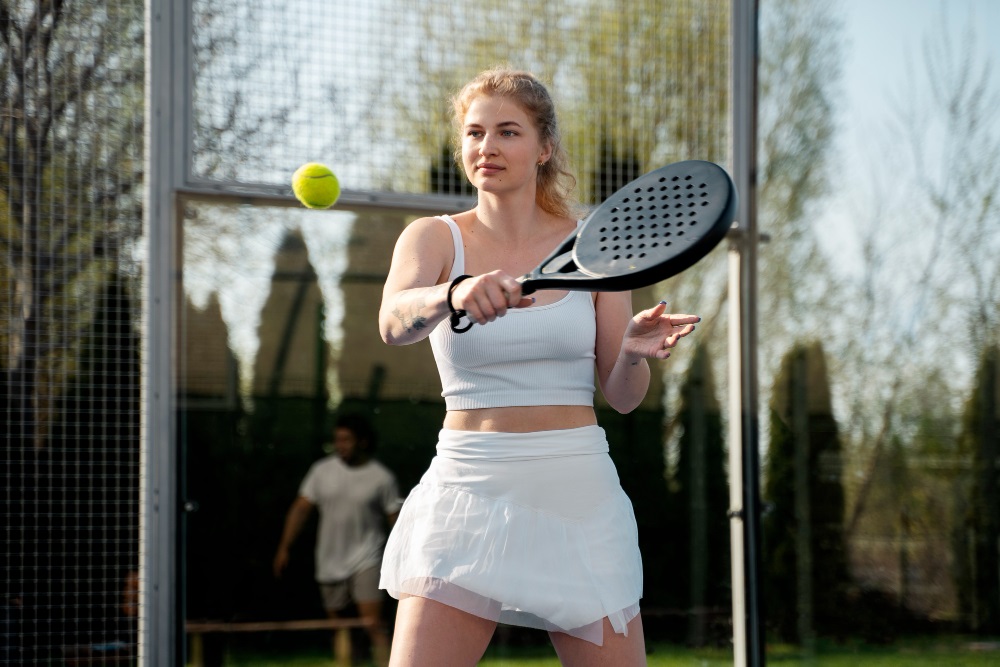
Power meets precision in padel’s most decisive stroke
It has become a defining sound across Britain’s expanding padel courts—the resonant thud of a bat striking ball, reverberating through glass walls, punctuating an otherwise quiet match with theatrical force. The smash, long the preserve of showmanship in racket sports, is finding new life—and serious scrutiny—in padel. But where its tennis equivalent serves to conclude a point with brute clarity, the padel smash presents a different challenge: one where physics, precision and subtlety eclipse raw force.
Padel’s popularity in the United Kingdom continues to grow at pace. New courts are being approved, coaching programmes are scaling, and equipment retailers are reporting marked increases in specialist bat sales. However, it is within the nuances of the smash that a deeper, commercial story is unfolding—one that offers insight not only into gameplay but into where investment, consumer behaviour and performance technology are headed.
Not Power, but Precision: Reframing the Smash
In padel, the smash is often misconceived. Many players, particularly those crossing over from tennis or squash, approach the shot with a default assumption that harder is better. Yet in a court hemmed in by walls that return almost everything, power frequently becomes counterproductive. The most effective smashes, as professional coaches and sport scientists are quick to note, are those executed with calculated control—leveraging spin, bat angle, and trajectory to manipulate the ball’s rebound, not obliterate it.
Biomechanical analysis has established that the optimal padel smash typically operates at controlled velocities of 80–100 kilometres per hour. More significant, however, is the application of spin—specifically, top or side spin exceeding 2,500 revolutions per minute—used to keep rebounds low or induce awkward angles on return. In effect, the shot becomes less a statement of athletic dominance and more a question of geometric economy.
These data points are not abstract. They are increasingly shaping how clubs structure coaching packages, how brands design equipment, and how players evaluate their own performance. And in doing so, they are also influencing spend.
A Commercial Engine Beneath the Surface
The smash, though visually dramatic, is also a subtle economic engine. According to aggregated data from leading coaching platforms and padel-specific retailers, frustration with the smash is one of the leading reasons intermediate players seek further instruction. Over 70% of newcomers routinely over-hit, sending the ball into easy retrieval zones. Close to half admit to lacking confidence in the shot, yet continue to attempt it during play.
For club managers and coaching businesses, this creates a feedback loop with monetisable outcomes. Lessons that isolate the smash, reframe it as a technique rather than an instinct, command premium rates. Some London-based coaches are charging north of £75 per hour for one-to-one instruction focused solely on improving control at the net.
Equipment sales follow suit. Bats marketed for “power with control” now dominate the premium segment, led by manufacturers such as Bullpadel, Nox, and Adidas. These products often feature a head-heavy balance, vibration-dampening cores, and faces reinforced with carbon fibre—all of which serve to moderate impact force while supporting better directional control. Retailers report that bats in the £160–£220 range, often purchased by players looking to improve their smash, now make up a growing share of top-line revenue.
The Smash Variants: More Than One Path to Dominance
There is no single smash in padel. Rather, there are three dominant variations, each carrying distinct technical profiles and commercial implications. The bandeja—a slow, defensive smash played with side spin—is often the first taught. The vibora, a faster version with more aggressive slice, is used to maintain pressure without relinquishing net control. And then there is the remate por tres—a high, top-spun drive intended to bounce off the court and over the side wall, often into the stands.
Each of these shots necessitates tailored coaching and encourages specific equipment upgrades. Indeed, a new trend among elite clubs is to package their training around these techniques, offering six-week development blocks that break down footwork, bat preparation, and post-impact recovery. These programmes are not only commercially viable but also serve to differentiate clubs in a competitive urban landscape.
Implications for Infrastructure and Court Design
Where once a padel court was a standardised, utilitarian structure, today’s builds are increasingly bespoke—engineered to complement, and in some cases enhance, the player’s ability to execute smashes. Ceiling height, for example, has become a differentiating factor. While the regulatory minimum stands at six metres, elite clubs are pushing for eight or even ten, offering players the vertical space needed to execute full-swing overheads with confidence.
The rear glass panels, too, have become a subject of architectural interest. Lower-rebound tempered glass is now favoured in premium builds, particularly in clubs catering to serious players who prefer strategic smashes over pure speed. These glass types slow the ball’s return off the back wall, encouraging finesse rather than chaos.
Lighting, often overlooked, plays a critical role in high-velocity smash execution. Overhead lighting systems are gradually being replaced with perimeter LED strips to reduce glare and shadowing—conditions that compromise visibility during upward-facing strokes.
Estimates from industry suppliers suggest these design upgrades add between £4,000 and £9,500 to total court construction costs. However, club owners who have implemented such features report shortened return on investment cycles, driven by increased premium bookings and higher session utilisation.
Data, Wearables and the Scientific Training Renaissance
An undercurrent of sports science is transforming how players train, with motion capture and biomechanics entering the padel mainstream. Systems developed for elite tennis and football academies—such as Kinexon and Playsight—are now being repurposed for padel, offering frame-by-frame analysis of swing angle, footwork precision, and post-impact spin.
At select academies, players are outfitted with wearable sensors that measure elbow torque, shoulder extension and smash efficiency. These technologies are no longer confined to elite players. Mid-tier clubs in London, Birmingham and Manchester have begun trialling “smart coaching” packages where players receive biomechanical readouts alongside traditional instruction.
From a business perspective, this scientific overlay acts as a retention tool. Players engaged in data-driven progress tracking are demonstrably more loyal, with rebooking rates 30% higher than those receiving traditional coaching alone. In an environment where subscription retention is as valuable as new sign-ups, this model offers real promise.
The Smash as Brand Vehicle
The padel smash has evolved beyond its tactical function into a visual motif—one exploited by brands, influencers, and clubs for its visceral appeal. Video snippets of high-arcing, top-spun smashes are among the most shared forms of padel content online, drawing millions of views on platforms such as TikTok and Instagram. For equipment brands, this creates an opportunity for narrative alignment: framing their products as enablers of iconic moments.
Consequently, marketing language has shifted. Terms such as “controlled aggression,” “smash-ready,” and “power with spin” dominate product descriptions and training literature. These concepts are not mere buzzwords—they are commercial hooks, resonating with players who aspire not only to play well but to be seen playing well.
Smash-specific product launches—particularly limited-edition bats and apparel drops—are fast becoming strategic sales events. Retail data shows spikes in online purchases following influencer-led content featuring highlight reel smashes, often timed with major tournament weekends.
Closing the Loop: Performance, Psychology and Profitability
It is perhaps no surprise that the smash, often delivered in moments of peak intensity, carries psychological weight. For many intermediate players, it is a shot loaded with expectations and self-doubt. Missed smashes can deflate confidence; well-executed ones can elevate belief.
Recognising this, a number of British clubs now run “smash psychology” clinics—short-form coaching sessions blending technical feedback with performance coaching. These clinics, priced between £45 and £60 per attendee, are proving popular, particularly with players transitioning from casual to competitive play.
Equipment loyalty programmes also intersect with this psychology. Several manufacturers now offer smash-linked trade-in schemes, where players can upgrade their bats after a year at a discount, often based on performance metrics logged through wearable tech or coaching feedback. The return rate on these schemes is strong, with customers demonstrating repeat engagement and a willingness to invest in peripheral equipment such as shoes, apparel and grips.
Beyond Technique: The Smash as Strategic Inflection Point
In sum, the padel smash is not merely a technical flourish. It is a strategic inflection point—one where equipment design, player psychology, commercial training models, and infrastructure converge. For investors and stakeholders examining where to allocate capital within Britain’s fast-growing padel ecosystem, the smash offers a surprisingly valuable lens.
It touches almost every monetisable segment of the sport, from elite academies and club scheduling, to retail trends and technology adoption. Just as importantly, it provides a narrative hook—a moment of spectacle through which the sport’s dynamism and accessibility are most readily conveyed.
To misunderstand the smash as an act of brute force is to miss the real story. Beneath the arc of every successful overhead is a formula of balance, timing and torque—one increasingly translated into revenue, loyalty and market differentiation.
Financial Disclaimer: The information provided in this article is for general informational purposes only and does not constitute financial advice. While every effort has been made to ensure the accuracy of the content, market conditions may change, and unforeseen risks may arise. The author and publisher of this article do not accept liability for any losses or damages arising directly or indirectly from the use of the information contained herein.
Copyright 2025: tennispadel.uk
Picture by: freepik.com