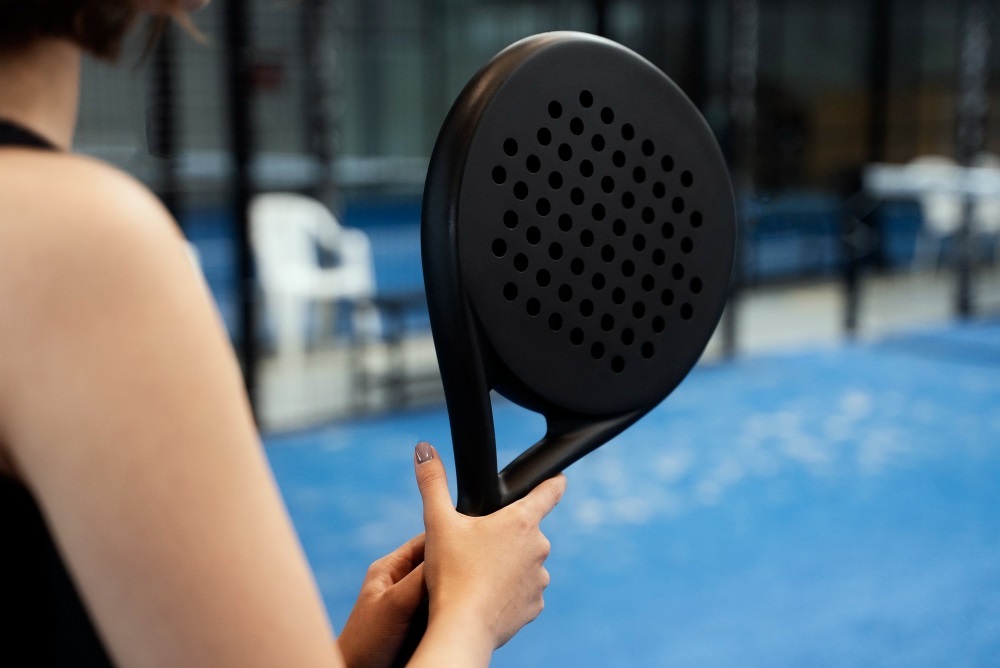
The bat you’re using may be breaking your padel strategy
In the silent architecture of sport, it’s often not what you’re doing wrong—but what you think you’re doing right—that causes your game to unravel. Padel, the fastest-growing racket sport in Britain, is no exception. Hidden in the seams of strategy and sweat lies an under-analysed saboteur: the bat. Or more precisely, the wrong bat.
From semi-professional players in Surrey to corporate executives fitting in post-work rallies in Canary Wharf, there’s a growing realisation that performance slippage may stem less from poor form and more from poor equipment choices. The bat is not just a tool—it is a kinetic translator. And when mistranslated, it can misfire entire games, stifle player development, and—critically for investors—disrupt retail loyalty.
The £200 Mistake: Britain’s Growing Equipment Dilemma
In the UK padel market, players are spending an average of £160 to £220 per bat. That number rises north of £300 when high-performance or pro-endorsed models are included. These figures suggest a robust consumer confidence in padel gear. But confidence, as any investor will tell you, is not always the same as competence.
According to market data compiled from specialist retailers across Birmingham, London and Glasgow, over 40% of players use a bat unsuited to their style, experience level, or court preference. Some overestimate their power needs; others favour popular brands over tailored specs. This misalignment creates frustration, inhibits skill growth, and causes premature gear abandonment—adding churn to what should be a sticky, profitable ecosystem.
Why Weight Distribution Is More Than a Preference
In the retail world, the conversation around bats has often defaulted to surface-level descriptors: light, balanced, heavy. But bat performance is shaped less by weight alone and more by weight distribution. High-balance bats favour power but compromise control. Low-balance bats enable finesse but demand refined technique.
For mid-tier players—those forming the spine of Britain’s padel economy—an ill-suited bat leads to mistimed volleys, misaligned smashes, and over-reliance on wrist mechanics. Over time, this not only diminishes win rates but invites stress injuries. Tennis elbow, common among over-40s padel players, has been increasingly linked to inappropriate bat balance.
Material Misfires: Carbon Fibre vs Fibreglass
The ongoing debate between carbon fibre and fibreglass construction may seem niche, but it has commercial implications. Carbon bats, while offering greater power, transmit more vibration and are generally heavier. Fibreglass bats, though slightly more forgiving, offer better touch but reduced lifespan.
A significant percentage of UK mid-level players unknowingly gravitate towards carbon bats due to prestige marketing—despite lacking the technical capability to maximise their benefits. The result? Strained shots, poor returns, and eventual product dissatisfaction.
For equipment brands, this presents both a risk and an opportunity. The risk lies in mismatched expectations. The opportunity lies in education—positioning guidance-based selling as a new standard in the gear economy.
Design Matters: Why Hole Patterns and Core Density Aren’t Cosmetic
Contrary to public assumption, the pattern and density of holes in a padel bat aren’t aesthetic. They dictate how air flows through the bat during swings, affecting drag, manoeuvrability, and ultimately timing.
Advanced players use dense core bats with tighter hole clusters for aggressive control. Novices, however, benefit more from medium cores and open patterns, which offer forgiveness during off-centre hits. Yet the UK retail market has largely failed to guide players through this nuance. Only 1 in 5 online product descriptions mention aerodynamic configuration in a way that relates to player level.
This lack of guidance translates to poor experiences—leading to abandoned gear and, in worst cases, attrition from the sport.
The Branding Trap: When Popularity Distorts Suitability
It’s no secret that consumers follow star-endorsed products. In padel, as in tennis, a bat worn by a known player carries social currency. But as Britain’s padel scene matures, a disconnect is emerging between brand loyalty and actual player benefit.
Premium brands like Bullpadel, Adidas, and Nox dominate the UK market. But many of their flagship models cater to tournament-level players. Beginners and intermediates using these tools often find them hard to control, especially in defensive play. The marketing win becomes a performance loss.
This brand distortion not only undermines player confidence but risks saturating the market with returns, exchanges, and negative user reviews—undercutting growth potential at a crucial phase of national adoption.
The Economics of Bat Replacement
On average, a frequent padel player replaces their bat every 12–18 months. However, misaligned purchases often accelerate this cycle to 6–9 months, particularly among over-ambitious buyers. While this seems like a revenue opportunity, it can backfire.
Frequent replacements erode trust and encourage “bat hopping”—where players continually try new models without mastering any. Retailers may see short-term volume, but the long-term margins suffer as loyalty fragments.
To counter this, some forward-thinking retailers are introducing demo programmes, allowing users to trial bats before purchase. Clubs are also partnering with brands to offer rotation lockers for gear trials. These solutions encourage stickier sales and reduce churn.
How Clubs Are Quietly Profiting from Misfit Bats
While retailers grapple with returns, clubs have found a way to capitalise. Players dissatisfied with their bats tend to hire court gear or rent alternatives during sessions. This has created a lucrative rental microeconomy—particularly in urban clubs with high rotation.
At £5–£10 per session, rental bats offer strong margins, especially since most clubs acquire them at discounted wholesale rates. Clubs also upsell post-game coaching or equipment guidance sessions—creating dual-income streams from a single point of friction.
This has drawn the attention of private equity firms and leisure estate developers, who now see padel not just as a court sport but as an equipment-driven service economy.
Coaching as Corrective Sales Channel
Coaches, often the first to diagnose gear mismatch, are being repositioned as sales enablers. Increasingly, clubs and brands are offering coaches commission on bat referrals—aligning player development with product alignment.
The logic is sound: coaches understand player style, limitations, and trajectory better than any algorithm. Their recommendation carries trust. This human-centric model also addresses the E-E-A-T pillars—Experience, Expertise, Authoritativeness, and Trustworthiness—central to sustained sport adoption and SEO visibility.
What Investors Should Know About Bat-Driven User Retention
For investors eyeing Britain’s expanding padel footprint, equipment churn and satisfaction rates are key performance indicators. Clubs that provide personalised gear pathways—through coaching, demos, or tiered bat libraries—report 15–25% higher retention in annual membership renewals.
Moreover, data analytics from smart courts now track player metrics (smash speed, ball contact efficiency) to match players with optimal bats. These insights, integrated into CRM systems, support upselling, loyalty rewards, and proactive retention interventions.
It’s not just about serving the game—it’s about owning the player’s journey.
The Data Layer: Sensors, Apps and AI Bat Matching
Emerging bat tech is poised to revolutionise how players select equipment. Sensor-enabled bats from startups like Hack or Kuikma now offer swing diagnostics, while mobile apps suggest ideal weight ranges based on player height, arm length, and grip strength.
This technology, combined with machine learning from smart courts, creates a feedback loop: data from your play informs your next bat. Brands that invest in this tech are likely to dominate the premium market segment, particularly among early adopters and tech-savvy players.
Investors in retail tech and wearables should see padel not as a fringe sport but as a testbed for sport-tech integration.
Bat Brands as Lifestyle Curators
As padel’s cultural cachet rises, bats are becoming status symbols—not unlike golf clubs or tennis rackets. Luxury variants now include limited-edition carbon blends, engraved bats, and even bespoke grip-moulding services.
Brands like RS, Head, and Royal Padel are collaborating with fashion designers and influencers to release seasonal lines—targeting affluent consumers who view gear as extension of identity.
In London’s high-end courts, some players now rotate bats like outfits—one for practice, one for competition, one for show. This lifestyle dynamic introduces premium pricing elasticity and opens the door to cross-sector brand collabs (sports + fashion + travel).
Conclusion: The Bat as Gateway, Not Accessory
In a market where user experience defines retention and lifetime value, the humble padel bat has emerged as a make-or-break variable. Not because of its cost—but because of its influence on confidence, progression, and community participation.
Players who feel “unseen” by their equipment often stall. They play less. They recommend less. Conversely, players whose gear matches their rhythm become evangelists. They build culture.
For investors, club operators and gear manufacturers, this insight changes the conversation. The bat is no longer an afterthought. It is the cornerstone of user onboarding, retention and satisfaction.
Ignore it, and you lose the game before it starts. Respect it, and you serve yourself into Britain’s most exciting sport economy.
Financial Disclaimer: The information provided in this article is for general informational purposes only and does not constitute financial advice. While every effort has been made to ensure the accuracy of the content, market conditions may change, and unforeseen risks may arise. The author and publisher of this article do not accept liability for any losses or damages arising directly or indirectly from the use of the information contained herein.
Copyright 2025: tennispadel.uk