Understanding the Structure and Strategy Behind Padel Tennis in Britain’s New Sporting Boom
Padel tennis, the glass-walled sensation that has reshaped Britain’s racket sport landscape, continues its ascent. With over 190,000 active weekly participants and more than 460 courts now open across the UK, padel is no longer emerging — it has arrived.
But behind the surge in participation, retail sales, and local council infrastructure bids lies a surprisingly overlooked cornerstone of the sport’s appeal: its rules.
Far from being an improvised hybrid of tennis and squash, padel tennis is governed by a distinct and increasingly codified set of regulations. These rules — adjusted for glass, rebound, team play and urban installation — are part of what makes the game both approachable for beginners and tactically rich for veterans.
So what are the official rules of padel tennis, how do they affect investment, accessibility and development, and why are they proving commercially important in Britain’s 2025 leisure economy?
At the Heart of Padel: The Doubles Format That Levels the Field
The first rule — and perhaps the most defining feature of padel — is its mandatory doubles format. The game is almost exclusively played in pairs, with no sanctioned singles matches on standard courts. Unlike tennis, where singles competition is the glamour format, padel’s very design promotes collaboration.
A standard court measures 20m by 10m and is enclosed by tempered glass walls at either end and mesh fencing along the sides. This enclosed design supports continuous rallies and rebound play, which in turn makes matches longer and more accessible to non-elite players.
The International Padel Federation (FIP), which oversees global rule development, notes that 98% of competitive matches are played in pairs. This structure also means that social play is maximised — one of the reasons padel has such a strong hold on group-based urban fitness markets.
The Serve: The Underhand Revolution
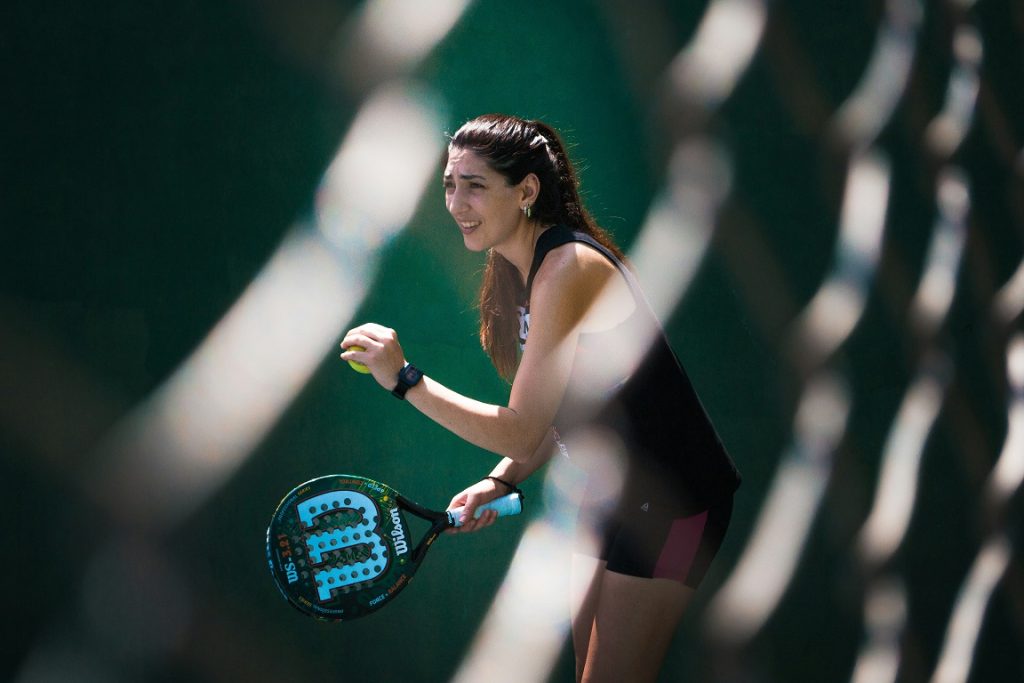
Unlike traditional tennis, where high-speed overhead serves dominate the competitive landscape, padel requires that all serves be underhand — struck below waist height and bounced once before contact.
In a June 2025 guidance update, the FIP and LTA Padel Division reaffirmed the legal serve motion: “The server must bounce the ball behind the service line and strike it underhand, ensuring initial contact is below the navel.”
This has a democratising effect. New players are not penalised for lack of serving technique or shoulder strength. It also reduces the risk of elbow strain and overhead injury, which contributes to the game’s longevity among older demographics.
Each serve must land cross-court in the service box and not hit the side wall directly; if it does, it is a fault. Serves that strike the rear glass (after bouncing in) are considered valid — a subtle but vital distinction that changes player positioning strategy at the net.
Scoring System: Familiar But Subtly Different
Padel tennis follows the traditional tennis scoring system: 15, 30, 40, deuce, advantage, game. A set is played to six games, requiring a two-game advantage. Tiebreaks are played at 6–6, using the 7-point tiebreak format.
However, matches are typically best of three sets, and in many club or recreational settings, a 10-point match tiebreak is used instead of a full third set. This flexibility is common in regional competitions and league play, especially to accommodate time constraints.
This simplified structure makes scheduling and programming more predictable for club operators, who must rotate courts efficiently. For players, it means less physical exhaustion and greater accessibility for mixed age or fitness groups — a growing demographic in the UK’s active leisure space.
Ball in Play: Rebound, Strategy and Wall Usage
Perhaps the most visible rule difference between padel and tennis is the use of glass. Once the ball bounces, players may allow it to hit the rear or side glass and still return it legally. This rebound mechanic introduces strategic depth without requiring elite-level shotmaking.
The ball must:
Bounce once on the court before hitting the wall
Be returned before a second bounce
Avoid hitting the fence or going outside the enclosure unless played legally (known as a “smash out”)
One of the most exhilarating moments in advanced play is the “outside retrieval”, where a player exits the enclosed court to chase down a ball that has rebounded high and wide after a smash. Under FIP rules, this is fully legal — provided the player re-enters via the designated door and does not interfere with other courts.
This dynamic playstyle has helped padel gain favour with broadcasters and spectators. The visual spectacle — combined with longer rallies and animated team communication — makes padel far more television-friendly than its quieter cousin, squash.
Net Play and Volley Dominance
Volleying is encouraged — even essential — in padel. Players aim to control the net, using sharp reflexes, quick feet and positional rotations to dominate the rally.
The no-volley zone, similar to pickleball’s “kitchen”, does not exist in padel. Players may volley from anywhere behind the net, provided they do not step into the net or touch it with their racket or body.
This encourages aggressive positioning, “poaching” across the centre line, and advanced team formations like the Australian serve formation or staggered defence.
The net cord rule also follows tennis conventions. A let is called if a serve clips the net but still lands legally in the service box. If it doesn’t land correctly, it’s a fault. Two faults result in the point being awarded to the receiver.
Game Duration and Commercial Viability
The average padel match — whether recreational or competitive — lasts 50 to 70 minutes, significantly less than the average tennis match, which ranges from 90 to 150 minutes.
This shortened format, combined with 4-player usage per court hour, makes padel more commercially viable for clubs and private operators. In practical terms, a padel court generates 1.7x more player footfall per day than a tennis court, according to the KPMG Padel Infrastructure Insight Report (June 2025).
Operators now schedule matches and leagues with military precision. Fixed-time court rentals, automated booking platforms, and staggered start times (every 70 minutes) have become standard.
Equipment Rules and Compliance
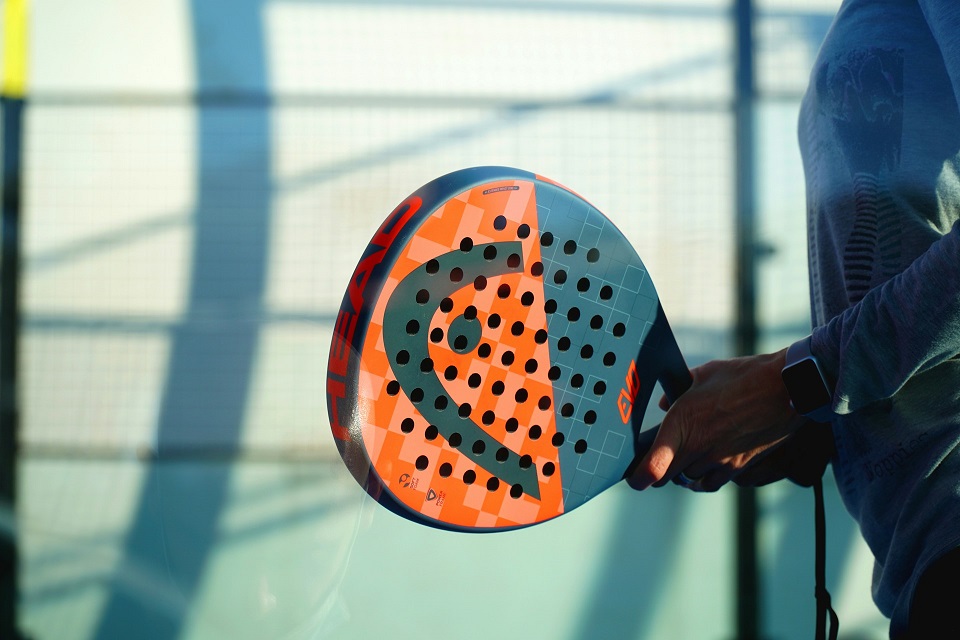
The official padel bat must be solid-faced (no strings), between 45.5cm and 50cm in length, and no more than 38mm thick. Most modern rackets weigh between 340g and 375g. Materials must conform to the FIP-approved list, which currently excludes graphite-weave polymers with rebound acceleration tech.
Balls used in padel are pressurised, similar to tennis balls but with slightly lower bounce and reduced diameter. The LTA Ball Standardisation Committee recently tested 32 brands and approved 12 for competitive UK play in 2025.
Shoes are also regulated at the national level. Approved padel footwear must include:
Non-marking soles
Lateral ankle support
Turf grip for synthetic surfaces
Non-compliant footwear risks voiding insurance during organised league matches.
Coaching, Interference and Conduct
Padel allows for mid-match coaching in certain leagues, provided it doesn’t delay play. Coaching during service motion is forbidden. The LTA’s 2025 Coaching Code provides tiered licences for padel instructors, ranging from Level 1 Foundation to Level 4 Elite Performance.
Unsportsmanlike conduct — including racket abuse, verbal aggression, or delay tactics — is penalised via a warning, point loss, game loss, and eventual match default, depending on severity.
In June, the FIP introduced new digital conduct recording systems for top-tier matches, allowing officials to track behavioural violations and apply rolling sanctions across tournaments.
Youth and School Variants
The Department for Education has endorsed a modified version of padel for secondary schools, called SoftPad, using:
Lighter bats (280g–320g)
Lower-compression balls
Shorter game formats (first to 15 points)
This variation promotes safety and early engagement without diluting the core rules. It also adheres to the School Sport and Activity Action Plan, linking physical activity to improved pupil outcomes.
Over 180 UK schools have adopted the format, with court constructions funded via Sport England’s Active Spaces initiative and matched local authority grants.
Rule Evolution and Future Additions
Padel is not static. The International Padel Rules Committee, which includes representation from the UK, Spain, Sweden and Argentina, meets biannually to review possible adjustments. Proposals currently under consideration for 2026 include:
Electronic line-calling for major tournaments
Shot clocks for service motion
No-let rule to speed up matches
Expanded singles format trial for exhibition events
The LTA, keen to maintain leadership in padel growth, supports experimentation — especially if it increases media coverage and youth participation.
Why Rules Matter Economically
Understanding padel rules is not simply a matter of gameplay — it is increasingly relevant to municipal planning officers, private investors, school governors, and insurance underwriters.
Rules dictate:
Court layout and planning permission
Equipment procurement and maintenance
Coaching standards and hiring
Player safety and compliance insurance
Tournament structures and spectator revenue
By codifying padel within national sport frameworks, Britain secures funding pathways, clarifies liability, and professionalises a game that now touches everything from secondary education to health & wellness programming.
Final Whistle: Simplicity Meets Structure
Padel’s rapid rise can be attributed to many things: lower costs, social gameplay, urban court access. But the real backbone is its structured simplicity — a ruleset designed to welcome newcomers, support fair play, and enable commercial scaling.
In a sporting economy grappling with participation inequality, budget cuts and post-Brexit import friction, padel’s tidy, codified nature is not just a game-changer — it’s an investor’s dream.
In that sense, the rules of padel tennis may well be Britain’s blueprint for building more sustainable, scalable and inclusive sports models in the decade ahead.
Financial Disclaimer: The information provided in this article is for general informational purposes only and does not constitute financial advice. While every effort has been made to ensure the accuracy of the content, market conditions may change, and unforeseen risks may arise. The author and publisher of this article do not accept liability for any losses or damages arising directly or indirectly from the use of the information contained herein.
Copyright 2025: Tennispadel.uk
Picture: freepik.com