Britain’s Most Strategic Sport Isn’t Just for Giants
In Britain’s sports clubs, leisure centres, and private rooftop courts, one debate continues to simmer alongside the surge in padel popularity: Is it better to be tall for padel?
It’s a question that has taken hold among beginners and professionals alike, as the nation’s fastest-growing racquet sport carves out space not just on court, but in conversation. With over 600 courts now open across the UK and forecasts from Sport England suggesting that figure could surpass 1,000 by early 2026, the game has shifted rapidly from trend to infrastructure.
And yet, as padel’s rapid expansion continues, height—an advantage long associated with sports like basketball and tennis—is under fresh scrutiny. Does standing over six feet truly confer superiority on the glass-walled court? Or does the sport’s complexity neutralise physical advantage in favour of something more strategic?
Not All Height Is Equal: Understanding the Court
Padel’s 10-metre-wide court is a fraction the size of a tennis arena. Shots rebound from walls, rallies extend beyond what physics might allow in traditional formats, and a 5’9″ player can hold their own against a towering opponent if they understand how to manipulate angles, tempo and positioning.
Still, reach matters. Overhead shots—particularly the bandeja, smash x3, and vibora—can be executed with greater downward power by taller players. British rising star Louie Harris, who measures 6’2”, routinely outpaces lower-ranked opponents with aerial dominance alone.
Among the top 10 global players on the Premier Padel Tour, more than half are over six feet, including Spain’s Arturo Coello, who stands at 6’3”. It’s not an anomaly—it’s an indicator that height remains a potent weapon.
But padel is no vertical dictatorship. While reach aids overhead play, it also challenges reaction speed and movement at ankle level—a frequent battlefield in padel’s fast-paced duels.
The British Blueprint: Training for All Shapes and Sizes
Across LTA-accredited coaching programmes in Birmingham, Leeds, and the South East, British instructors are actively moving away from a one-size-fits-all approach. According to data published in the LTA’s 2025 Padel Talent Blueprint, talent is assessed on tactical intelligence, adaptability and spatial awareness, not just athletic profile.
Speaking from Padel4All Southampton, head coach Mark Russell is clear:
“We’ve got juniors who are 5’7” giving headaches to taller players because they can retrieve balls at wall level, switch direction faster, and reset rallies under pressure. Height is useful, but it’s not decisive.”
For every 6’4” player delivering booming overheads, there’s a smaller athlete countering with finesse—dropping spin-loaded lobs, chasing down rebounds, and exploiting blind corners of the court.
It’s precisely this tension—power versus control, reach versus reactivity—that makes padel such a compelling game for all body types.
Retail and Racquet Trends Reflecting the Split
The padel equipment market is evolving in tandem with player profiles. In the UK’s £14 million padel retail segment—up from just £5.2 million in 2022—brands are tailoring racquet lines to distinct player categories.
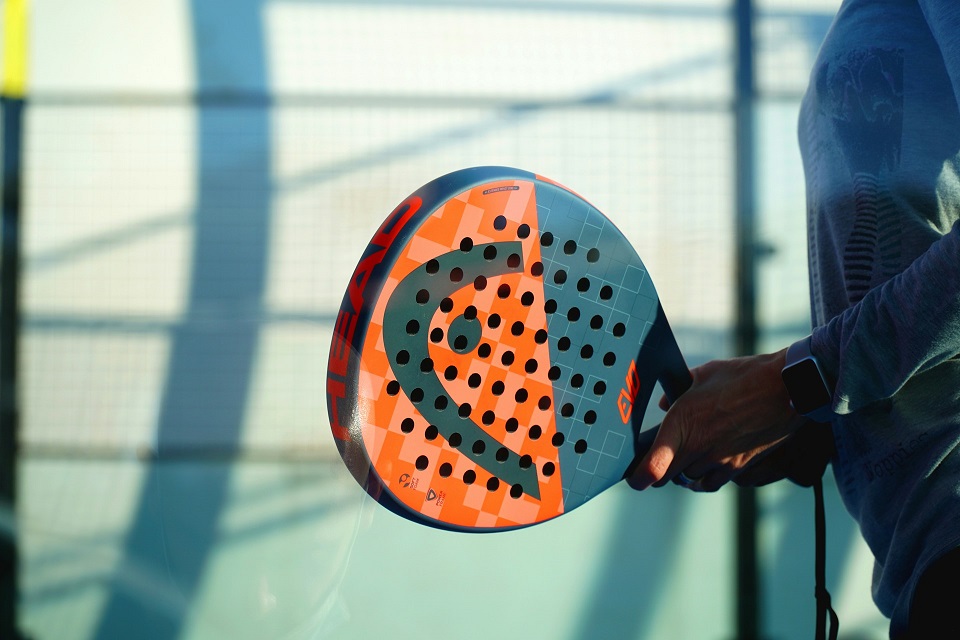
Diamond-shaped racquets, which favour taller and more aggressive players due to their high balance points, now dominate premium shelves at ProDirect and Padel Shack. They offer unmatched power but require superior timing and control. For those who prefer agility and quick handling, round or teardrop-shaped racquets—more forgiving and manoeuvrable—remain bestsellers among shorter or intermediate players.
Footwear, too, is shifting. Taller players are more likely to opt for high-collar shoes with added ankle support, while lighter designs favouring speed are finding traction among nimble movers. Retail prices range from £90 to £150, with top brands such as Babolat and Asics now labelling models for “power players” or “quick movers”—coded terms that often correlate to build.
In a sport where equipment choices reflect on-court identity, the high-street offering has quietly answered the question: there’s no universal answer to height’s influence—it depends on how you play.
The Physiology Debate: What Science Reveals
A comprehensive 2023 study by the Spanish Padel Federation, reviewed by the International Journal of Sports Physiology and Performance, broke down the biomechanical advantages of taller padel players. Findings showed:
Players over 6’0” executed 19% more effective smash winners
The same group demonstrated 14% lower recovery rates on low-speed, glass-rebound balls
Lateral agility was more consistent in players under 5’10”, particularly on defensive points
The results mirror Britain’s anecdotal experience. Coaches increasingly report that while tall players can dominate short matches with quick smashes and tight volleys, they tend to fatigue faster in longer rallies—where movement, not muscle, is king.
As padel in the UK becomes more structured—now with over 400 LTA-accredited coaches—training emphasis has shifted to matchplay tactics. Not just “how hard can you hit it?” but “when should you?”
The Cost of Competitive Advantage
It’s also worth weighing the financial aspect. Padel isn’t just growing—it’s commercialising.
In London, hiring a private padel court at peak times can cost £40 to £60 per hour. Outside of the capital, prices drop slightly, but club memberships and equipment investments remain higher than equivalent tennis pathways. Elite coaching is priced between £35 and £65 per hour, depending on experience and venue.
For players looking to maximise natural advantages like height, tailored racquets and custom gear are becoming part of the competitive toolkit. Extended-grip models, vibration-dampening gloves, and high-compression balls are all part of the growing high-performance market.
For those without the vertical advantage, however, coaching becomes more important. Anticipation drills, wall control, and drop-shot mastery are areas where the shorter player can—and often does—fight back.
Insight from the Elite: Height Isn’t Strategy
Juan Lebrón, Spain’s iconic World No. 1 for much of the 2020s, summed it up in an interview with Padel World Press:
“Being tall is useful. Being clever is essential.”
That sentiment echoes across the UK circuit. Among top British amateurs, the sharpest players are those who can disrupt rhythm, manage pace, and control the middle. As padel evolves from an accessible club game into a fiercely strategic competition, height becomes one of many ingredients—not the whole recipe.
Louise Barton, an LTA-certified coach working in Manchester, puts it simply:
“Padel isn’t like tennis, where you can ace your way through a set. It’s closer to chess—if you make better decisions over and over, you’ll win, regardless of height.”
Wallplay and the Height Paradox
Ironically, one of the most technically demanding aspects of padel—the walls—is where shorter players often shine. The rebound angles, deceptive bounces, and need for low, grounded positioning means taller athletes must work harder to stay in a defensive stance. In fact, many tall players—particularly those with tennis backgrounds—initially struggle with wall reads, often stepping in too early or too late.
In contrast, players of more compact stature often develop stronger reflexive muscle memory. They crouch faster, turn quicker, and are less likely to overrun returns. As any seasoned padel player will attest, the wall punishes hesitation—and agility, not altitude, offers the upper hand.
Inclusive by Nature, Competitive by Design
This nuanced balance—where advantages shift not only by point but by playing style—is what makes padel unique in the British sporting landscape.
It’s also why the game is proving so appealing to mixed-ability players. The latest Sport England Active Lives survey revealed that 42% of new padel participants in 2024–25 were first-time racquet sport players, many of them drawn in by the sport’s sociable format and forgiving entry point.
Padel’s popularity in UK schools is also growing. The LTA’s pilot programme now includes 41 state schools offering padel alongside traditional tennis, with the objective of widening access and diversifying participation.
Height might offer an advantage at the elite end, but in the park, the club, or the school hall, it’s irrelevant. Everyone is welcome.
Conclusion: Is It Better to Be Tall for Padel?
In some situations, yes. On high balls, aggressive volleys, and court dominance from the net, taller players enjoy measurable gains. Their reach, power, and overhead angle are undeniable assets.
But padel isn’t a one-dimensional sport. It’s built on reaction time, intelligent movement, positional understanding, and team coordination. All of which neutralise—or at times, reverse—the advantage of height.
So is it better to be tall for padel? Only if you’re also quick, clever, and willing to learn the walls. In Britain’s great padel revolution, height might be helpful—but it will never be enough on its own.
Financial Disclaimer: The information provided in this article is for general informational purposes only and does not constitute financial advice. While every effort has been made to ensure the accuracy of the content, market conditions may change, and unforeseen risks may arise. The author and publisher of this article do not accept liability for any losses or damages arising directly or indirectly from the use of the information contained herein.
Copyright 2025: Tennispadel.uk
Picture: freepik.com