Blog

  • Padel Tennis Takes Root in Britain’s Schools

    Youth Sport Faces a Pivotal Crossroads
    In playgrounds across Britain, a new sound is echoing—rubber balls ricocheting off glass walls, the soft thwack of rallies more familiar in southern Europe than South Yorkshire. Padel, long a fixture in Spanish suburbia and now the fastest-growing sport in the UK, is finding its footing in an unlikely arena: the state school PE curriculum.

    Once considered a leisure pursuit of well-heeled clubs, the game—played in doubles on an enclosed court—has crossed the threshold into mainstream youth sport. As of mid-2025, more than 950 padel courts have sprung up across Britain, many on land once reserved for ageing netball courts or unused football pitches. And at the centre of this movement lies a question fundamental to the future of British sport: how can schools reconnect young people with physical activity in a world of dwindling attention spans and fierce competition from screens?

    At the Department for Education, that question has grown more urgent. New data from spring 2025 confirms that 38 per cent of children aged 5 to 16 still fail to meet the NHS’s recommended hour of daily activity. The figure rises steeply in inner-city areas and among teenage girls—a pattern that successive governments, despite strategies and slogans, have struggled to reverse.

    The rise of padel offers no silver bullet, but it may present the most credible alternative in years. Easy to learn, highly social and refreshingly egalitarian, it requires no towering physique or elite background to compete. And for schools grappling with engagement crises, stretched budgets and old-world facilities, padel has quietly become a lifeline.

    From Camden to Coventry, local authorities are moving with speed. The LTA’s Schools Padel Initiative, launched in late 2023, now partners with 42 schools nationwide—28 in the independent sector and 14 in the state system. Its early results are compelling. A pilot report published this April showed a 28 per cent rise in weekly PE participation among Year 9 pupils, with teachers citing the sport’s “instant fun factor” and students praising its “easy rules and non-judgy vibes”.

    James Wilkinson, a certified LTA padel coach working with schools in Yorkshire, believes the sport has struck a cultural nerve. “It’s not aggressive, it’s not technical, and everyone’s involved,” he says. “For a PE teacher, it’s a dream—fast setup, quick wins, and no benchwarmers.”

    Facilities, of course, remain a sticking point. While a standard padel court occupies just 200 square metres—less than half that of a football pitch—the upfront cost of building one can still give bursars pause. Estimates from operators such as Game4Padel and Rocket Padel put construction costs at between £30,000 and £45,000 per court, including surface, fencing and lights. Yet the economics are increasingly favourable.

    Academy trusts across the Midlands and North have begun adopting dual-use models, leasing court space to the public outside school hours to recoup costs. Horizon Education Trust, which operates four schools in Leicestershire, opened a three-court padel facility this spring under such a model. Trustee accounts seen by this paper show the courts generating between £1,200 and £1,800 in monthly income, depending on weather and weekend usage. That, say trust directors, puts the installation on track to break even in under three years—less time than it typically takes to recover investments in 3G pitches.

    Sport England has taken notice. While the body’s capital funding scheme does not yet earmark padel as a priority sport, officials confirmed to TennisPadel.uk that pilot discussions are underway to include padel court builds within local authority school sport bids in 2026. In the interim, schools are drawing from Lottery-backed PE grants, local business sponsorships and—critically—partnerships with commercial padel providers.

    Operators like Padium and Game4Padel have created “build-operate-transfer” agreements with schools, allowing them to retain school-time access to facilities while outsourcing maintenance, bookings, and insurance. In some cases, the company retains operating rights during evenings and weekends in exchange for covering installation costs.

    What emerges is a delicate but workable partnership—private sector innovation meeting public sector necessity. For the schools, the value is not simply financial. It’s also strategic.

    With government pressure mounting on school performance metrics around wellbeing and inclusion, padel provides measurable outcomes. Teachers at one West London academy reported a 15-point rise in student wellbeing surveys since the court’s installation. SEN specialists have praised padel’s non-contact nature and emphasis on coordination over brute force. And girls’ PE participation, in several mixed academies surveyed, has risen to its highest level in five years.

    Elsewhere, curricular change is following suit. The LTA’s teacher training programme, certified by the Chartered Institute for the Management of Sport and Physical Activity (CIMSPA), has now upskilled over 650 educators in the basics of padel coaching. New PE lesson frameworks, co-developed with the Youth Sport Trust, are being trialled in Key Stage 3 this autumn, with modules that integrate padel into GCSE PE coursework under the sport’s racquet category.

    Meanwhile, discussions with awarding bodies are advancing. A draft proposal shared with this publication by a curriculum advisor suggests that AQA and OCR may formally list padel as an assessed sport in their 2026 GCSE PE syllabi, pending regulatory review.

    From a career pathway perspective, the timing could hardly be better. With padel included in the 2023 European Games in Kraków and under consideration for Olympic inclusion in 2032, a formalised school-to-pro pipeline is becoming viable. The LTA’s youth performance department confirmed that a national U16 padel ranking system will launch in 2026, with regional school qualifiers to feed into national trials.

    Britain is not alone. In Sweden, over 1,500 padel courts now exist, many on school grounds. In Argentina, school tournaments fill entire weekends, often televised locally. And in Spain—the sport’s spiritual home—government subsidies support public schools to build and maintain courts, viewing padel not as an extracurricular afterthought but as a tool for national fitness.

    In Britain, the momentum is building, but it remains fragile. Planning permission remains a frequent obstacle, especially in conservation areas or near housing, where sound reverberations and evening lighting raise complaints. Equipment sourcing, too, is a barrier. Padel rackets, balls and court surfacing are still niche in the educational supplier market, making procurement cumbersome for time-pressed administrators.

    Resistance also lingers within some corners of school sport departments, particularly in traditional grammar schools or rugby-heavy regions. There, padel can be dismissed as a passing trend, a social sport unsuited to “proper” athletic development.

    Yet such scepticism appears increasingly detached from the wider movement. The numbers are clear. The interest is real. And the appetite—especially among pupils themselves—is growing faster than many predicted.

    For school leaders eyeing the coming decade, the question is less about whether to adopt padel, and more about when. For a generation raised on fast-paced, social and shareable experiences, padel may be the rare analogue activity that resonates. And for schools facing tight margins, tight schedules and tighter expectations, it may be the investment that pays off far beyond the final whistle.

    Financial Disclaimer: The information provided in this article is for general informational purposes only and does not constitute financial advice. While every effort has been made to ensure the accuracy of the content, market conditions may change, and unforeseen risks may arise. The author and publisher of this article do not accept liability for any losses or damages arising directly or indirectly from the use of the information contained herein.

    Copyright 2025: tennispadel.uk
    Picture: freepik.com

  • Padel Tennis vs Pickleball

    A Tale of Two Sports in a Rapidly Changing World
    As the racket sport renaissance gathers momentum, two names keep cropping up in conversations from Buenos Aires to Birmingham: padel and pickleball. They may be grouped together in headlines and hashtags, but beneath the surface, these two games are not the same sport—nor are they growing at the same speed, appealing to the same demographics, or built for the same future.

    In a global market increasingly hungry for social, accessible and low-impact sports, padel and pickleball have emerged as front-runners. But while casual observers might lump them together, investors, schools, sports bodies, and players are learning that the differences between them are not only structural—but strategic.

    This article examines the rise of both padel and pickleball in 2025, draws a clear line between their rules, design and audiences, and makes the case for why padel is gaining stronger footholds in the UK, Europe, the Middle East, and Latin America.

    A Shared Surge, But Not a Shared Identity
    It is not difficult to understand the confusion. Both sports are often played in doubles. Both offer quick matches, limited learning curves, and require less running than traditional tennis. Both are attracting ageing tennis players, newcomers, and fitness-seekers alike. Yet to conflate the two is to miss the nuance that explains why different countries are embracing one more than the other.

    Pickleball, invented in Washington State in 1965, has grown explosively in the United States, especially since the COVID-19 pandemic. According to the Sports & Fitness Industry Association (SFIA), the number of players in the US reached 13.6 million in early 2025, up from 4.8 million in 2021. The game, played with plastic paddles and a perforated wiffle ball on a court similar in size to badminton, has become a recreational staple for retirement communities, country clubs, and increasingly, urban parks.

    Padel, by contrast, is a European-born hybrid, emerging in Mexico in 1969 and adopted enthusiastically by Spain, where it has long been the second-most played sport after football. It uses solid foam-core rackets, a depressurised tennis-style ball, and is played on a fully enclosed court roughly a third smaller than a tennis court. It is a game of walls, angles, spin, and fast reflexes.

    As of 2025, the UK’s Lawn Tennis Association (LTA) reports that padel participation now exceeds 400,000 players, with courts doubling in number over the last 18 months to reach over 950 nationwide. Europe-wide, estimates from the International Padel Federation (FIP) place the number of padel players at 25 million, compared to pickleball’s global estimate of around 15 million.

    So while both are ascendant, their growth is not equal in pace, geography, or professionalisation.

    The Rules Are Different—And So Is the Experience
    On court, the contrast is immediate. Pickleball, with its slow-moving plastic ball and no-wall layout, rewards placement and patience. There is little spin, and the serve must be underarm. Padel, by contrast, is a kinetic, wall-rebounding dance that rewards creativity, spin, and teamwork. It feels closer to squash or racquetball in intensity, but is still gentler on the joints than traditional tennis.

    Pickleball courts are not enclosed, making them cheaper to install. But padel courts, while more expensive, create an immersive experience, enabling longer rallies and a sense of tactical play that players describe as deeply addictive. The wall element, absent from pickleball, adds a layer of strategy unique to padel.

    In short, pickleball is more passive, ideal for low-impact recreation, whereas padel is more active, combining speed, reflexes, and court awareness. For younger players, padel has begun to emerge as the sport of choice in urban environments where space is scarce but energy is high.

    Cultural Context: A European vs. American Story
    There is also a cultural story underpinning the divergence. Pickleball’s meteoric rise has been predominantly North American, with 85% of courts located in the US. It is deeply tied to the American sporting psyche: fun-first, casual, and heavily marketed. Investment from celebrities like LeBron James and Tom Brady has bolstered its visibility. US Pickleball, the governing body, has laid out plans for an Olympic push—although recognition remains limited outside North America.

    Padel, meanwhile, is being driven not by flash or celebrity, but by infrastructure, federation policy, and global demand. Spain has more than 15,000 padel courts, and it is already part of school curriculums across parts of Europe and Latin America. In 2023, padel made its debut at the European Games in Kraków, a significant milestone in its bid for Olympic inclusion. That campaign is now being backed by over 60 national federations, including in the UK, Sweden, Italy, and Argentina.

    In the Middle East, padel has surged. The UAE, Qatar, and Saudi Arabia are investing heavily in indoor padel clubs, aligning it with their vision for lifestyle-led sports infrastructure. Pickleball, by contrast, has made almost no visible inroads in these markets.

    Demographic Divide: Who’s Playing What?
    The difference in growth also comes down to who is playing each sport.

    Pickleball has found a strong foothold among older demographics. Surveys from Pickleheads and SFIA suggest that the average player age remains over 40, despite efforts to court younger groups. While leagues and tournaments are emerging, the sport retains a distinctly recreational identity. Attempts to launch a pickleball pro tour have met with modest commercial success but limited international recognition.

    Padel, meanwhile, is skewing younger. In the UK, around 50% of new padel participants are under 35, according to the LTA. In Spain and Argentina, elite juniors are already training in academies, with rankings and performance pathways in place. In the UK, plans are now underway for a formal national youth league and GCSE PE accreditation.

    Unlike pickleball, padel is increasingly seen as a legitimate athletic sport, not just a pastime. And this perception matters to investors, sports councils, schools, and clubs.

    Infrastructure and Investment Models
    The build economics of the two sports differ, though both are relatively affordable compared to traditional tennis or squash.

    Pickleball courts can be laid over existing hard surfaces, often temporarily or without planning permission. As such, costs are lower and installation is quicker. For parks departments and housing associations in the US, this is a clear advantage.

    Padel courts require more substantial installation. They are enclosed with tempered glass walls, artificial turf, and lighting. Yet the investment case is compelling. Operators such as Padium, Rocket Padel, and Game4Padel in the UK report strong returns on investment, particularly in urban sites. One London operator claims average court usage exceeds 80% capacity during peak hours, with session-based pricing models between £20–£35 per hour.

    What’s more, padel’s enclosure allows for monetisation beyond simple bookings—including branded tournaments, coaching academies, club memberships, and merchandising. Several clubs now report waiting lists for peak-time court slots.

    In short, pickleball is easier to install, but harder to monetise, while padel demands more capex, but offers stronger long-term ROI in the right markets.

    Professional Pathways and Olympic Potential
    In professional terms, padel has a commanding lead. The Premier Padel Tour, backed by Qatar Sports Investments, launched in 2022 and now includes stops across Europe, the Middle East, and Latin America. Prize pools have grown rapidly, and media deals are expanding.

    In contrast, professional pickleball remains largely a domestic affair. The Major League Pickleball (MLP) and Professional Pickleball Association (PPA) are working to raise the sport’s profile, but lack recognition from most international sporting bodies.

    The International Padel Federation, by contrast, is pursuing Olympic recognition for 2032, supported by the European Olympic Committees. That ambition, if realised, could elevate padel to a tier-one status in global sport, akin to table tennis or badminton.

    Schools, Cities, and Public Health
    One of the most promising battlegrounds for both sports is education.

    In the UK, padel is entering schools at pace. Through partnerships between the LTA and the Youth Sport Trust, over 600 PE teachers have been trained in padel delivery. Padel is being trialled as part of GCSE and BTEC sport qualifications. Its low-impact nature, mixed-gender suitability, and social dynamic make it highly suited to the modern PE curriculum.

    Pickleball, while offered in some American schools, has not made the same inroads in Europe. In the UK, it remains almost entirely absent from school sport strategy. As such, padel is currently the only one of the two with national education integration, positioning it better for sustainable long-term adoption.

    Public health agencies are also taking notice. Padel’s cardio output is comparable to tennis, while its injury risk is lower. A 2025 study published in The Lancet Sport reported improved cardiovascular fitness and mental wellbeing among adults playing padel twice a week over a 12-week trial. Similar data for pickleball remains limited and regionally restricted.

    What the Future Holds
    The comparison between padel and pickleball will no doubt persist, fuelled by headlines, celebrity endorsements and viral content. But for those charting the future of sport—whether governments, clubs, investors, or schools—the choice is increasingly a strategic one.

    In North America, pickleball has won the day for now. Its speed to install and wide demographic base have made it a natural fit for American recreational landscapes. Yet its lack of federation integration, pro tour depth, and global reach leave questions about its staying power.

    In Europe, the Middle East, and Latin America, padel is surging ahead. From rooftop courts in Madrid to indoor venues in Riyadh, it is becoming not just a sport but a cultural force. Its trajectory is supported by federation structure, competitive viability, and infrastructure funding.

    In the UK, padel is fast becoming more than a niche. It is entering schools, appearing in public health policy discussions, and drawing sustained capital from both private and public sectors.

    The two sports may share a sense of fun, simplicity and accessibility. But make no mistake: padel tennis and pickleball are not the same sport—and only one is shaping up to be the sport of the next generation.

    Financial Disclaimer: The information provided in this article is for general informational purposes only and does not constitute financial advice. While every effort has been made to ensure the accuracy of the content, market conditions may change, and unforeseen risks may arise. The author and publisher of this article do not accept liability for any losses or damages arising directly or indirectly from the use of the information contained herein.

    Copyright 2025: tennispadel.uk
    Picture: freepik.com

  • How Big is Padel Tennis in UK?

    A Sport on the Brink of Mainstream
    From Manchester mill roofs to repurposed schoolyards in Camden, from the club terraces of Surrey to the retail parks of Leeds, a new sound echoes across British sport—the bounce and crack of a padel ball against glass. At first mistaken for a curious cousin of tennis or squash, padel tennis has in 2025 become more than just a continental import. It is now one of the fastest-growing sports in Britain, carving out real estate, player numbers, and investment with the urgency of a movement that refuses to be ignored.

    For a sport that barely existed in the UK a decade ago, the numbers are eye-catching. According to the Lawn Tennis Association (LTA), more than 400,000 players across the UK now take part in padel, a figure that has doubled in just over 24 months. In 2020, the country had fewer than 100 courts. In 2025, that number has surpassed 950, with at least 150 more expected by the end of the year.

    But statistics alone do not capture the momentum. In the language of sport development, padel is in transition—from trend to transformation. For clubs, councils, investors and schools, this is not just about filling calendars with bookings. It is about reshaping the British sports landscape to reflect changing demographics, consumer habits, and post-pandemic demands for inclusive, accessible, social sport.

    A Game Born Abroad, Thriving in British Soil
    Padel’s roots lie far from the drizzle of British suburbia. First played in Mexico in the 1960s and popularised in Spain and Argentina, padel is a racquet sport that blends the walls of squash with the scoring of tennis and the pace of five-a-side football. Played almost exclusively in doubles, it’s fast without being exhausting, strategic without being intimidating, and welcoming to beginners in a way that most racquet sports are not.

    In Spain, padel is now more popular than tennis. There are more than 15,000 courts nationally and more than 6 million active players, according to data from the Spanish Padel Federation. In the UK, it’s clear we’re late to the party—but catching up quickly.

    The turning point came in 2019, when the LTA formally recognised padel under its remit. This opened the door to official coaching qualifications, club integration, funding access and facility certification. Since then, a coalition of public and private actors has accelerated the growth. Local councils began granting padel-friendly planning permissions. Tennis clubs, many of which struggled with member retention post-COVID, began converting unused courts or building new ones. And investors saw in padel the rare combination of low build costs, high social engagement, and recurring revenue.

    Infrastructure: The Courts Are Coming
    There is no sport without a place to play. And padel’s small footprint—just 10 metres by 20 metres per court, compared to 23.7m x 10.9m for tennis—means that clubs, schools and developers can fit multiple courts in spaces previously considered underutilised.

    According to the LTA Padel Facility Tracker, as of June 2025:

    Over 950 courts are now operational in the UK

    35% are in London and the South East

    30% are indoor or covered

    The West Midlands, Manchester, and Glasgow are among the fastest-growing regions

    Importantly, these are not temporary pop-ups or fads hosted by lifestyle brands. They are long-term installations, increasingly paired with coaching academies, junior sessions, corporate events, and even food and beverage facilities.

    Operators such as Game4Padel, Rocket Padel, Padium, and Playtomic have become household names in the sector, each racing to establish first-mover dominance. These companies offer more than courts; they offer platforms, loyalty apps, tournament circuits and private coaching—layering technology atop traditional club models.

    Who’s Playing—and Why?
    The appeal of padel cuts across demographics in a way few modern sports manage. In the UK:

    Around 48% of new padel players are aged 25–44

    36% are women, up from 28% in 2021

    Over 50% are new to racket sports altogether

    Crucially, padel is often a group activity. Played in doubles by design, it promotes social bonding and repeat play, making it ideally suited for after-work leagues, school programmes and family sessions.

    For those tracking public health trends, this is significant. The Department for Digital, Culture, Media & Sport (DCMS) has long identified the drop-off in adult physical activity as a policy concern. With fewer than 63% of UK adults meeting recommended exercise levels in 2024, sports that offer fun, low-intensity movement without pressure are increasingly prioritised. Padel fits that brief perfectly.

    Furthermore, the social sharing nature of the game—quick rallies, winsome angles, and enclosed courts perfect for photography—has helped padel thrive on platforms such as Instagram and TikTok. What five-a-side football was for Generation X, padel is becoming for Generation Z.

    From Private Equity to Public Policy
    In economic terms, the padel boom is now impossible to ignore.

    Private equity firms have entered the scene with force. In 2024, MML Capital and other investors backed Game4Padel with a multi-million-pound Series B round. Qatar Sports Investments, already funding the Premier Padel tour globally, has signalled interest in UK venue partnerships. Clubs have sprung up not only in leisure parks and old warehouses, but also in luxury health clubs, shopping centres, and even on cruise ships.

    Simultaneously, public bodies are warming to the game. Several local councils in Manchester, Bristol, and Edinburgh have submitted padel-inclusive plans for their 2025–2030 sports development frameworks. Some have earmarked padel for inclusion in school sports programmes, thanks in part to its non-contact format and ease of play.

    At the national level, the LTA has integrated padel into its “Tennis Opened Up” strategy, aiming to double participation by 2028. A joint advisory committee is currently reviewing proposals to integrate padel into the GCSE PE curriculum, with pilot schemes already underway in London academies.

    International Comparisons and Global Positioning
    The UK is not alone in its fascination with padel. In Sweden, where the sport exploded between 2018 and 2022, indoor padel clubs have saturated city outskirts. In France, padel is now under the French Tennis Federation’s jurisdiction, with public funding and federation rankings. Italy, Portugal, Qatar, Argentina, and Mexico all report strong growth and federation-backed expansion.

    But the UK is viewed internationally as a high-potential market due to three distinct characteristics:

    High urban density with underused sport infrastructure

    An affluent, health-conscious middle class

    A fragmented but adaptable club system open to innovation

    Indeed, international padel tournaments are now eyeing the UK as a viable host destination. Premier Padel, the leading global tour, added London to its calendar in 2024. The event drew over 9,000 attendees across three days, with televised coverage distributed in over 100 countries.

    Professional Play and Olympic Potential
    While still a young professional sport, padel is moving swiftly towards legitimacy on the global stage. The International Padel Federation (FIP) now boasts over 75 member countries, and the sport was included in the 2023 European Games in Kraków—a precursor, some believe, to potential Olympic inclusion in Brisbane 2032.

    The UK now has a national team, ranking inside the top 15 globally. Coaching pathways, ranking structures, and regional tournaments are being formalised by the LTA and partner clubs.

    For young athletes looking for competitive options beyond football, rugby or tennis, padel offers a realistic elite trajectory, backed by emerging sponsorships, media coverage, and even university scholarships abroad.

    Risks and Resistance
    No sport grows without pushback. Some tennis traditionalists have expressed concern that padel is drawing attention and funding away from their sport. The question of court conversions—especially at heritage clubs—has led to disputes over land use, noise, and exclusivity.

    Local planning objections have also emerged, particularly in suburban or conservation areas where enclosed glass courts and evening floodlights are viewed as intrusive. Several projects in the Home Counties have been delayed due to resident complaints, despite their alignment with council health objectives.

    And while many clubs see padel as a revenue driver, others are wary of the operational costs and staff retraining involved in running dual-offering facilities.

    Nevertheless, the overall tone remains one of cautious optimism, even from sceptics. Few deny the scale of padel’s appeal. The question now is how well the sector manages its next phase of expansion—and whether the infrastructure, coaching, and policy environments are robust enough to match the pace of demand.

    What Comes Next?
    With the UK Padel Open set to return in 2026 and a growing push for padel courts in public schools, the next five years will be pivotal.

    Commercial operators are preparing for the second wave of expansion—targeting smaller cities, housing estates, and even holiday parks. Meanwhile, the LTA is set to release its 2026–2030 Padel Development Strategy, which is expected to include performance centres, funding for inner-city courts, and new club affiliation models.

    If this momentum holds, industry analysts suggest the UK could see 1 million padel participants by 2030, making it one of the country’s top 10 participation sports.

    More than a fitness trend or lockdown novelty, padel is revealing itself as a generational shift in how Britons engage with sport. It is informal but structured, fast-paced but accessible, competitive but inclusive.

    For all the glass, turf, and capital behind it, padel’s real strength lies in its simplicity. Four players, two rackets each, one small court—and the power to reshape British sport for good.

    Financial Disclaimer: The information provided in this article is for general informational purposes only and does not constitute financial advice. While every effort has been made to ensure the accuracy of the content, market conditions may change, and unforeseen risks may arise. The author and publisher of this article do not accept liability for any losses or damages arising directly or indirectly from the use of the information contained herein.

    Copyright 2025: tennispadel.uk
    Picture: freepik.com

  • Premier Padel UK Open

    Britain’s Big Serve into the Global Arena
    The echo of padel racquets striking balls under floodlights in the UK was once a niche curiosity. Now, it’s the soundtrack to a national sporting renaissance. With the arrival of the Premier Padel UK Open in 2025, the nation has officially joined the global stage of this fast-rising racquet sport. The event, held at the prestigious National Tennis Centre in Roehampton, is no longer just a footnote on the international calendar—it’s a headline act.

    A Sport No Longer on the Sidelines
    Padel, a hybrid of tennis and squash, has enjoyed meteoric growth across Europe, and the UK has caught the wave. As of June 2025, Sport England estimates over 130,000 regular padel players nationwide—up from just 89,000 in early 2024. The Lawn Tennis Association (LTA), which now officially governs padel in Britain, lists 287 padel courts across England, Scotland, and Wales, with 64 new courts under construction.

    Yet despite these numbers, the Premier Padel UK Open represents more than just player metrics—it’s a signal of legitimacy. Hosting an elite-level competition, part of the international Premier Padel Tour sanctioned by the International Padel Federation (FIP), puts Britain squarely in the frame alongside Madrid, Rome, and Doha.

    Roehampton Takes Centre Stage
    The UK Open was launched on 3 June 2025, drawing thousands to the South London venue, which had recently completed a £12 million redevelopment to accommodate the sport’s rise. Three show courts were erected, with capacity for over 5,000 spectators, along with indoor training bays, hospitality zones, and commercial partner activations.

    According to Premier Padel organisers, over 41,000 tickets were sold across the seven-day event, with peak attendance during the semi-finals and finals broadcast live on Sky Sports, Eurosport, and Premier Padel’s own OTT platform. The men’s final, featuring world number ones Arturo Coello and Agustin Tapia, was watched by an estimated 1.2 million UK viewers, while the women’s final, won by Ariana Sánchez and Paula Josemaría, drew 870,000—a record for padel in Britain.

    A Boon for British Clubs and Facilities
    What does this mean for British padel at grassroots level? Everything. The UK Open’s visibility has had a ripple effect, especially in club membership spikes. Padel4All, a leading UK padel operator, reported a 30% increase in enquiries the week following the UK Open, while David Lloyd Clubs, which now operate padel courts at 22 of their locations, reported a 19% rise in court bookings.

    The event has also encouraged investment in infrastructure. According to the LTA’s June 2025 funding report, £7.3 million in public-private grants have been ringfenced for new padel court construction, particularly in underserved areas like the Midlands, North East, and Scotland. Premier Padel organisers have hinted at rotating the UK Open to northern cities such as Manchester or Glasgow in future years to stimulate wider regional growth.

    British Talent on the Rise
    For homegrown players, the Premier Padel UK Open was both a showcase and a proving ground. Britain’s leading men’s pair, Christian Medina Murphy and Sam Jones, reached the quarter-finals—an achievement that secured them wildcard entries to the upcoming Madrid Open. On the women’s side, rising star Abbie Brooks, aged 21, reached the round of 16 and has since signed a sponsorship deal with Adidas UK.

    Coaching academies have also reported increased uptake. The LTA Padel Coach Accreditation Scheme, launched last year, now has over 320 certified coaches, with more than 1,500 sessions delivered monthly across affiliated venues. The UK Open’s spotlight is accelerating not only player participation but the entire ecosystem—coaching, officiating, merchandising, and content.

    Commercial Power: The Brands Backing the Boom
    Major sponsors lined up for the event. Barclays, Rolex, and Babolat featured as headline partners, while Red Bull activated live DJ sets and player pop-ups across the fan village. Merchandise sales during the UK Open week exceeded £400,000, with Bullpadel kits, HEAD racquets, and branded apparel selling out by the semi-final stage.

    Broadcast rights were reportedly sold for £2.6 million, with UK licensing split between Sky and Discovery. These figures might pale in comparison to Wimbledon or the Premier League, but in padel’s world, they’re transformative—and growing fast.

    Padel influencers, many crossing over from tennis and squash, garnered millions of impressions on platforms like TikTok and Instagram. One UK influencer, @PadelWithBen, saw a 250% follower increase after daily updates from the Roehampton event.

    The South American Spark and European Legacy
    It’s worth noting that while Britain has jumped aboard the padel bandwagon, the train has long been moving at pace across other parts of the world. In Spain, over 6 million players now engage in padel regularly—more than tennis. Italy and Sweden follow closely, with over 2,500 courts each and robust national ranking systems. Argentina remains a powerhouse, contributing most of the men’s and women’s top 10 players.

    Premier Padel, founded in 2022 and backed by Qatar Sports Investments, has been instrumental in turning what was once a leisure pursuit into a global broadcast product. With its sharp branding, tech-forward coverage, and professionalised calendar, it has done for padel what the ATP Tour once did for tennis. The UK Open is now part of a 25-event global series spanning the Middle East, Europe, and Latin America.

    Ticket Prices, Packages, and Participation
    Tickets to the Premier Padel UK Open were attractively priced—ranging from £18 for general admission to £95 for VIP seating with courtside hospitality. Youth and student discounts made the event broadly accessible. Packages that included coaching sessions with pro players, behind-the-scenes venue tours, and branded merchandise were also popular, selling out within hours of launch.

    More than 4,500 attendees opted into “Try Padel” clinics hosted in partnership with LTA-accredited coaches during the event week—offering a powerful onboarding route for curious beginners.

    Economic Impact and the Business Case for More
    A joint impact study by the LTA and Visit London estimates the Premier Padel UK Open contributed £17.2 million to the local economy. This figure includes hotel stays, transport, food and drink, merchandising, and associated tourism. Small businesses, particularly local cafés and hospitality venues near Roehampton and Putney, reported significant uplift during the week.

    The success of the UK Open has ignited calls for a second annual UK padel event on the Premier Tour calendar—potentially in the autumn—anchored either in Manchester or Birmingham. There are also discussions about integrating a Premier Padel Challenger event focused on British players and up-and-coming European talent.

    A Broader Cultural Shift
    Perhaps more than the numbers, what stands out is the palpable shift in Britain’s attitude towards padel. No longer the “Spanish beach sport” or a side attraction in gym clubs, padel is now seen as a legitimate competitive discipline with pathways from amateur to elite.

    According to YouGov polling commissioned during the UK Open, 47% of UK adults aged 18–34 expressed interest in trying padel within the next six months. Among existing players, 62% said they were more likely to attend future events or join a club after watching the tournament.

    Looking Ahead: More Than Just a Moment
    While it’s easy to frame the Premier Padel UK Open as a single success story, industry insiders believe it is merely the beginning. The combination of institutional backing, commercial interest, and grassroots participation suggests padel in Britain is not a passing trend but a fast-maturing sport.

    With London as a springboard, other cities are already positioning themselves to become padel hubs. Manchester, Leeds, Glasgow, and Bristol are expanding their padel infrastructure, while the University of Nottingham has announced plans to build the UK’s first dedicated padel training centre for student-athletes.

    The LTA, meanwhile, has pledged a £15 million investment package to double the number of courts nationwide by 2028, including support for padel-specific clubs in lower-income areas.

    Final Word: Not Just a Smash Hit—A Lasting Serve
    The Premier Padel UK Open didn’t just arrive; it landed with purpose. It signalled that Britain is no longer content watching from the sidelines. With serious infrastructure, rising local talent, and robust commercial backing, the UK has entered the global padel conversation with a bang—and it looks like it’s here to stay.

    From Roehampton to Redditch, Bristol to Bolton, the question is no longer “What is padel?” but rather “Where can I play—and when’s the next tournament?”

    Financial Disclaimer:
    The information provided in this article is for general informational purposes only and does not constitute financial advice. While every effort has been made to ensure the accuracy of the content, market conditions may change, and unforeseen risks may arise. The author and publisher of this article do not accept liability for any losses or damages arising directly or indirectly from the use of the information contained herein.


    Copyright 2025: Tennispadel.uk
    Picture: freepik.com

  • Padel Courts Near Bristol and the South West

    A Regional Boom Fuelled by Demand and Innovation
    As the sun sets over Clifton Suspension Bridge and the rolling hills of Somerset, another landmark is rising in popularity—not architectural, but athletic. Padel tennis, the hybrid racquet sport that swept through Spain and Scandinavia, has found a fervent new home in the South West of England. From Bristol to Bath, Exeter to Plymouth, the region is experiencing an unprecedented upsurge in padel participation, fuelled by smart investment, rising leisure demand, and a generational shift in how people socialise and stay fit.

    This is no passing fad. Padel courts are now as likely to be discussed in town planning meetings as car parks or cycling lanes. In June 2025, the sport has cemented itself not only in urban Bristol but across the broader South West landscape—an area long associated with tennis, rugby, and rowing. But why is padel surging here, and what does it cost to join the movement?

    From Clifton to Cornwall: Padel’s South West Emergence
    According to Sport England’s latest report, the South West region has seen a 47% increase in active padel players over the past 12 months—outstripping even London in year-on-year growth. While Bristol remains the epicentre, other regional hotspots include:

    Bath, with three newly completed courts and more under planning

    Exeter, where University funding has boosted student access

    Plymouth, home to Devon’s first purpose-built indoor padel complex

    Cheltenham and Taunton, where racquet clubs are being retrofitted for padel use

    As of June 2025, the region hosts 34 operational courts, with another 19 in various stages of construction. The LTA’s regional development office confirms that the South West now represents 14% of total padel court capacity nationwide, a staggering figure given the comparatively lower population density.

    Key Padel Venues in Bristol and Beyond
    Padel4All Lockleaze (Bristol)
    Courts: 3 covered

    Prices: £24–£32 per hour

    Extras: Community leagues, LTA coaching
    Padel4All remains Bristol’s flagship provider. Since 2022, it has expanded to Lockleaze and now offers beginner pathways, competitive ladders, and youth programmes.

    Rocket Padel Cribbs Causeway (Opening Late 2025)
    Courts: 9 indoor

    Predicted Pricing: £34–£38/hr
    The much-anticipated Bristol venue from Swedish operator Rocket Padel will be one of the UK’s largest indoor complexes. With smart booking apps, retail tie-ins and corporate facilities, it’s expected to reshape the city’s sporting map.

    South Bristol Sports Centre (Hengrove)
    Courts: 2 semi-covered

    Prices: From £26/hr
    This centre services southern neighbourhoods like Whitchurch and Bedminster, with affordable pricing and public outreach initiatives.

    Bath Recreation Ground Padel Club
    Courts: 3 panoramic courts (outdoor)

    Pricing: £20 off-peak, £30 peak
    Tucked behind Bath Rugby’s home turf, this facility opened in mid-2024 and has quickly become a hub for players commuting in from Chippenham and Trowbridge.

    Exeter University Sports Park
    Courts: 2 outdoor, student-priority

    Access: Free for students, £22/hr for public bookings
    University backing and LTA grants allowed Exeter to add padel to its already impressive facilities. Socials, leagues and inter-university fixtures are now a fixture on the calendar.

    Padel Plymouth (Marsh Mills)
    Courts: 4 indoor

    Pricing: £25–£35/hr
    South Devon’s most advanced facility, this new complex opened in January 2025 and is now attracting players from across Torbay, Totnes and even Bodmin.

    Cheltenham Racquets & Fitness Club
    Retrofit: 2 padel courts in place of squash

    Prices: From £28/hr
    Responding to falling squash participation, Cheltenham’s elite club now hosts member padel leagues, guest sessions and mixed doubles events.

    Cost Comparison: Padel in the South West
    Padel court pricing in the region largely mirrors national averages but varies by coverage, peak time and club status:

    Venue Type Typical Cost per Hour Examples
    Outdoor community court £20–£25 Bath Rec, Exeter Uni
    Semi-covered urban court £26–£30 South Bristol Sports Centre
    Indoor club court £32–£38 Rocket Padel Cribbs, Padel Plymouth
    Premium leisure facility £35–£40+ David Lloyd Westbury, Cheltenham Racquets

    Racket hire remains affordable, typically £4–£6, with balls averaging £7 per tube. Annual memberships for local padel clubs start around £150–£220, while drop-in bookings are increasingly managed via apps like Playtomic or MATCHi.

    Coaching, Leagues and Player Pathways
    With participation climbing, demand for coaching has intensified. The LTA has rolled out Level 1 and Level 2 Padel Coaching Courses across the South West, many hosted in Bristol and Bath.

    Current regional coaching rates:

    Private 1:1: £35–£50/hr

    Group clinics: £12–£18/session

    Youth camps (5 days): £90–£120

    Top providers include:

    The Padel School (touring clinics in Bristol and Exeter)

    Game4Padel Coaching Collective (active in Cheltenham)

    Local LTA-qualified freelancers, many of whom cross over from tennis

    Social leagues are thriving. South West Padel League, established in late 2024, now has divisions in Bristol, Bath and Plymouth, with league entry fees averaging £50–£65 per team per season.

    Why the South West is Embracing Padel Over Tennis
    The appeal is multifaceted. Tennis is well-loved in the South West, but padel offers:

    Faster gratification – players pick it up quickly, leading to better retention

    Less space required – key for urban areas like Bristol

    Weather-resistant venues – especially important in wetter western regions

    Social engagement – four players per match encourages interaction

    These factors are especially pertinent in a region where council tennis courts are underused, and investment in multi-use racquet sports is preferred over single-sport facilities.

    Investment and Infrastructure: A Surge in South West Funding
    The LTA and Sport England earmarked £8.2 million for the South West padel network between 2024 and 2026. In addition:

    Rocket Padel’s Bristol facility received £1.1 million in private funding

    Cheltenham Council approved £500k for a sports redevelopment that includes padel courts

    Padel4All’s new plans in Bath and Frome are seeking planning approval for covered courts on brownfield sites

    Game4Padel and PadelTech (the UK’s largest padel court installer) have reported the South West as “a priority growth region” in 2025, with land costs and community demand creating ideal conditions.

    The Role of Tech in the South West Padel Ecosystem
    Booking tech has transformed padel in the region. Playtomic, MATCHi and bespoke apps like Rocket Padel’s internal system have allowed users to:

    Book within seconds

    Join local WhatsApp playing groups

    Access rankings, league updates and partner finders

    These digital integrations are especially popular in student-heavy areas like Exeter and Bristol.

    Retail Momentum: From Equipment to Apparel
    Bristol, Bath, and Exeter now all support padel retail thanks to:

    Decathlon (Bristol & Exeter) – starter rackets from £45

    Padel Shack (Online) – serving Cheltenham, Devon and Cornwall

    Specialist pop-ups at tournaments and leisure centres

    Top-selling brands include Head, Bullpadel, and Babolat, while local retailers have begun bundling equipment with venue vouchers to increase adoption.

    Tournaments, Corporate Days and Social Events
    Tournaments are now common:

    Monthly ladders in Bath, Cheltenham, Bristol and Exeter

    Mixed doubles Sundays at South Bristol and Bath Rec

    Corporate leagues involving regional firms like Wessex Water, Dyson, and Aardman Animations

    Entry fees range from £10–£25, with winning prizes in the £50–£250 bracket. These events have become a key driver of community and regular participation.

    What the Future Holds for South West Padel
    With 19 new courts set to be built by early 2026, expect further growth in:

    School partnerships (notably in Taunton and Weston-super-Mare)

    Modular courts in holiday parks across Cornwall and Dorset

    Outdoor roofed venues optimised for year-round play

    The proposed South West Padel Cup, currently in the planning phase, would link cities like Bristol, Exeter and Plymouth in an annual regional tournament backed by tourism boards and energy firms.

    Conclusion: The South West is Not Just Playing – It’s Leading
    While London and Manchester dominate headlines, the real padel revolution is happening in the South West. With a well-balanced mix of public funding, private initiative, digital engagement and passionate communities, the region is not just catching up—it’s setting the pace.

    For anyone near Bristol, Bath, or the broader South West wanting to join the racquet revolution, the message is clear: there’s never been a better time to step on court.

    Financial Disclaimer: The information provided in this article is for general informational purposes only and does not constitute financial advice. While every effort has been made to ensure the accuracy of the content, market conditions may change, and unforeseen risks may arise. The author and publisher of this article do not accept liability for any losses or damages arising directly or indirectly from the use of the information contained herein.

    Copyright 2025: Tennispadel.uk
    Picture: freepik.com

  • Padel Courts Near Newcastle Upon Tyne

    How the North East is Building a New Racquet Culture
    The echo of racquets and the rhythm of bounce off glass are no longer confined to the southern reaches of Britain. In Newcastle upon Tyne and across the broader North East, padel—Britain’s fastest-growing racquet sport—is finally carving out a firm foothold. And while infrastructure may lag behind Manchester or London, the demand here is no less urgent, nor the growth any less electric.

    From Jesmond to Gateshead and into County Durham, padel courts are appearing in fitness clubs, leisure centres, and private venues. Local authorities are beginning to warm to the sport’s inclusive appeal, while sports retailers and coaching academies are preparing for a new wave of demand across Tyneside.

    But the question remains—where exactly can one play padel in and around Newcastle in 2025? How much does it cost? And is the North East ready to support a sport that’s moving from trend to staple?

    This report offers a deep dive into the padel court scene near Newcastle upon Tyne, complete with pricing, availability, development plans, coaching access, and the economic factors shaping the sport’s future in the region.

    A Region on the Rise: From Curiosity to Courts
    In early 2022, Newcastle had precisely one padel facility—an outdoor experimental court attached to a private gym in Ponteland. Today, that picture has changed markedly.

    According to the latest LTA and Padel England data (June 2025), there are now:

    10 operational padel courts in the Greater Newcastle area

    4 new courts currently under construction (expected completion by Q4 2025)

    3 public leisure proposals under review by Gateshead and North Tyneside councils

    While Newcastle’s total still trails behind regions like Manchester (28 courts) or Birmingham (32), the growth rate is more than double the national average. Between Q2 2023 and Q2 2025, padel court capacity in the North East increased by 215%.

    This surge is being led by private operators, supported by Sport England’s Northern Facilities Fund and new regional partnerships under the LTA’s Padel for Cities initiative.

    Where to Play Padel Near Newcastle Upon Tyne
    The following are the most notable venues offering padel court access in or near Newcastle as of June 2025:

    The Northumberland Club (Jesmond)
    Courts: 2 covered outdoor padel courts

    Cost: £30/hr (non-members), £24/hr (members)

    Coaching: 3 LTA-certified padel instructors

    Extras: Racquet hire, café, league nights

    Padel@Life Fitness (Ponteland)
    Courts: 2 outdoor, LED-lit courts

    Access: Gym members and public bookings

    Cost: £32/hr; group lessons from £12/player

    Events: Monthly club tournaments

    David Lloyd Newcastle (Shiremoor)
    Courts: 1 indoor padel court

    Access: Members only

    Coaching: Limited availability

    Extras: Premium fitness suite, pool, padel pro shop

    PadelBox Cobalt Park (North Shields) – Opening August 2025
    Courts: 3 indoor padel courts (pre-book only)

    Booking: Via PadelBox app

    Launch Offer: £22/hour court hire for first 3 months

    Extras: Corporate events, school outreach

    Wearside Padel Centre (Sunderland)
    Courts: 2 indoor courts, LTA-accredited

    Distance: 30 minutes from Newcastle centre

    Cost: £28/hr, coaching £40/hr private

    Target market: Intermediate and league players

    Pricing Breakdown: How Does Newcastle Compare?
    Padel court hire across Newcastle is reasonably competitive by national standards. The absence of city-centre congestion and lower operating overheads means prices are 15–20% lower than London and 10% cheaper than Manchester.

    Facility Type Hourly Rate (Newcastle) Hourly Rate (London) Hourly Rate (Manchester)
    Private padel venue £28–£34 £45–£60 £35–£40
    Council facility (proposed) £18–£22 £28–£36 £20–£26
    Coaching session (1:1) £35–£50 £65–£80 £45–£60
    Group lessons (per person) £10–£15 £15–£25 £12–£20

    Court costs reflect demand, and while availability in Newcastle remains limited, operators are actively targeting off-peak pricing and seasonal discounts to broaden access. Most venues offer multi-session bundles and racquet hire starting at £3–£5 per use.

    Coaching and Instructor Availability
    One of the key challenges in the North East is the shortage of qualified padel coaches. As of June 2025:

    Only 8 LTA-accredited padel coaches are active in Tyne & Wear

    Just 3 coaches are operating full-time

    Junior padel sessions are limited to two venues on a weekly basis

    That said, development is underway. The LTA’s Padel North Pilot, launched in January 2025, provides bursaries and training grants for tennis coaches transitioning to padel in the North East. An additional 12 coaches are in certification courses, with placements expected from Q3 onwards.

    Popular local coaching offers include:

    Beginner Bootcamp (Jesmond): £99 for 6 sessions

    Ladies & Lobs Wednesdays (Ponteland): £12 per group class

    Padel Tactics for Tennis Converts (Sunderland): £45/hour one-to-one

    Court Construction: What’s in the Pipeline?
    Despite progress, Newcastle’s padel expansion remains in its infancy. As part of the LTA’s 2025 strategy, the city has been identified as a Tier 2 development zone, meaning it is eligible for funding but must secure local authority support and private partners.

    Current confirmed builds include:

    PadelBox Cobalt Park (North Shields) – Private operator with retail and hospitality links

    Gateshead Indoor Padel Arena – Council-approved, funded via Levelling Up allocation; expected Q2 2026

    Newcastle University Sports Centre – 2 rooftop padel courts under construction; access to students and public from Q1 2026

    If all sites proceed, court capacity across Newcastle and its immediate suburbs could reach 20–24 courts by late 2026, aligning it with cities such as Bristol and Leeds.

    Who’s Playing Padel in Newcastle?
    Padel England and Sport England joint surveys in April 2025 reveal that:

    Padel participation in Newcastle has grown 270% since 2022

    56% of padel players in Tyne & Wear are new to racquet sports

    34% of players are female, outpacing the national padel average of 29%

    Average player age: 28–44 years old

    The appeal spans social players, ex-tennis athletes, and fitness-focused club members looking for shorter, less intense activity. Corporate padel nights are now hosted by regional firms such as Sage and Greggs, both headquartered in the city.

    Padel is also making headway in university sport, with both Newcastle and Northumbria universities offering padel modules as part of their 2025 intramural calendars.

    Retail, Equipment and Regional Support
    Newcastle’s growing padel culture has stimulated demand for gear, with local outlets now stocking mainstream padel brands:

    Decathlon Metrocentre: Stocks Babolat, Kuikma, Adidas

    Sweatband UK (Online): Offers free North East delivery on padel racquets

    Racket Sports NE (Jesmond): Local padel racquet demos and stringing services

    Racquet prices in the region range between £80–£250, with introductory kits bundled at £130–£160, including shoes and balls. Specialist padel footwear (grip sole design) is still limited in bricks-and-mortar shops but widely available online.

    Support from the LTA and Padel England includes regional workshops, coach certification grants, and digital promotion of local padel nights via the PadelPlay app.

    Junior and Community Programmes
    Junior padel development is still in early stages across the North East, but progress is visible. The LTA’s Padel Youth Start pilot now runs in five Tyneside schools, supported by part-time coaches and sport-in-schools outreach funding.

    Key efforts include:

    Jesmond Padel Juniors (ages 8–12): Weekly sessions, £6.50 each

    Sunderland Schools Padel League: 7 primary schools participating

    Teen Tactics Tuesdays (Ponteland): For ages 13–17, includes tournament entry

    Several council bids are underway to bring padel into community sports centres as part of post-COVID activity revival schemes. Padel England has pledged £150,000 in ringfenced development grants for public courts and youth programmes in the North East by the end of 2026.

    Commercial and Tourism Potential
    Tourism bodies are beginning to eye padel as an emerging asset in the region’s leisure strategy. NewcastleGateshead Initiative, the local destination agency, has proposed padel-themed city breaks targeting visitors from London and Edinburgh, using padel courts as part of hotel leisure packages and weekend tournaments.

    Corporate sponsorship, while modest, is on the rise. Local businesses including:

    Fenwick Newcastle

    Northumbrian Water

    Bellway Homes

    are exploring sponsorship of local padel leagues, event days, and community clinics.

    The opportunity to tie padel into broader wellness, hospitality, and regeneration efforts is a significant driver behind council proposals. The Gateshead Indoor Arena project, for instance, is part of a larger “active waterfront” redevelopment plan linking to river cycling paths and cafe expansions.

    Summary: What Newcastle Gets Right
    Padel in Newcastle is a classic case of demand outpacing infrastructure—but it is also a blueprint in progress.

    Strengths:

    Strong uptake across new player demographics

    Competitive pricing compared to national averages

    Strategic partnerships in education, fitness and property sectors

    Regional pride driving community programmes

    Challenges:

    Low number of coaches per capita

    Lack of indoor court capacity during winter months

    Limited visibility outside of core leisure venues

    With momentum building, and new venues slated to double capacity by mid-2026, Newcastle is positioning itself as a credible regional padel hub. And with access widening and investment flowing north, its time in the padel spotlight may only just be beginning.

    Financial Disclaimer: The information provided in this article is for general informational purposes only and does not constitute financial advice. While every effort has been made to ensure the accuracy of the content, market conditions may change, and unforeseen risks may arise. The author and publisher of this article do not accept liability for any losses or damages arising directly or indirectly from the use of the information contained herein.

    Copyright 2025: Tennispadel.uk
    Picture: freepik.com

  • Padel Courts Near Manchester

    The Northern Powerhouse of Britain’s Racquet Boom
    If London lit the spark, then Manchester is now the engine room of Britain’s padel tennis revolution. From converted car parks to purpose-built arenas, the Greater Manchester area has become a focal point for the sport’s northern expansion. And with more courts on the way, the question for residents and investors alike is not if padel is growing—but how fast, and where next?

    As the UK’s fastest-growing sport, padel has already made its mark across the Home Counties, Greater London and the South Coast. But in 2025, it is Manchester’s turn to shine. With demand outpacing supply, and a population eager for accessible, social fitness, the region’s embrace of padel is both cultural and commercial.

    This article explores the expanding network of padel courts near Manchester, examining location availability, pricing, coaching infrastructure, and what makes this northern city one of Britain’s most promising hubs for racquet sport investment and participation.

    Manchester’s Padel Moment: A City Catching Up—Fast
    The numbers speak for themselves. As of June 2025, the Greater Manchester region boasts 28 operational padel courts, with a further 11 courts under construction or in planning stages, according to data from Padel England and Sport England’s local development tracker.

    This figure includes both public-access venues and private installations, many of which have emerged since the end of the pandemic as health clubs and leisure providers pivoted to more social, outdoor-friendly sports. From Stockport to Salford, and Altrincham to Ancoats, padel is no longer a southern luxury—it is now a northern fixture.

    Padel England identifies Manchester as one of the top five UK cities for court expansion in 2025, behind only London, Birmingham, Leeds and Bristol. Weekly court bookings are up 41% year-on-year across the region, and padel-specific retail sales from outlets such as ProDirect and Decathlon Trafford Centre have doubled in 18 months.

    Where Can You Play Padel in Manchester?
    Here are some of the most popular and accessible padel venues currently operating in and around Manchester:

    The Northern Padel Club (Trafford Park)
    Courts: 6 outdoor floodlit courts

    Cost: £36 per hour (non-members); £28 for members

    Facilities: Coaching, leagues, junior academy, social nights

    Operator: Game4Padel partnership

    Padel Club UK – Altrincham
    Courts: 4 covered courts

    Cost: £30–£38 per hour

    Extras: Café, changing rooms, racquet hire

    Membership: £55/month includes reduced bookings

    David Lloyd Manchester North (Middleton)
    Courts: 2 indoor courts

    Access: Members only

    Coaching: LTA-accredited instructors available

    Extras: Gym, spa, padel shop

    Powerleague Manchester Central (Ardwick)
    Courts: 3 rooftop courts (opened Q2 2024)

    Cost: £40/hour; group coaching £12/player

    Extras: Night lighting, online booking, beginner sessions

    Chorlton Sports Hub (Chorlton-cum-Hardy)
    Courts: 2 outdoor courts, council-funded

    Cost: £20/hour public hire

    Community Use: Free youth slots on Saturdays

    These venues cover a mix of models—private club, hybrid public-private, and council-supported. The result is a diverse and growing network, but also one that reflects wider inconsistencies in padel access across the UK.

    Pricing Snapshot: What Does It Cost to Play?
    Compared to tennis, padel remains the more expensive racquet option, due to higher construction costs and commercial operating models. However, Manchester courts tend to be 10–20% cheaper than their counterparts in Greater London.

    Venue Type Hourly Court Cost (Manchester) Hourly Court Cost (London)
    Private padel club £30 – £40 £40 – £60
    Council/charity venue £18 – £25 £25 – £35
    Gym-exclusive (members) Included in membership Same
    Group beginner coaching £10 – £15 per player £15 – £25 per player
    Junior academy session £8 – £12 per player £12 – £20 per player

    Manchester’s cost advantage is significant for newcomers. Padel coaching in Greater Manchester averages £45/hour for private 1-to-1 tuition, compared with £65 in the capital. Retail outlets also offer local click-and-collect discounts for padel racquets and balls, with brands like Bullpadel, Nox, and Adidas now widely stocked in sports shops across the North West.

    Coaching Infrastructure: A Work in Progress
    Manchester is currently home to 22 LTA-accredited padel coaches, with another 9 expected to complete training by autumn 2025. While this figure remains below London’s 70+ instructor base, it represents a major leap from 2022, when only three certified coaches operated in the city.

    Leading padel coaching providers in the region include:

    The Padel Club Academy (Altrincham) – Group and private lessons; junior ladder league

    LTA North West Talent Pathway – Coaching scholarships for under-18s in partnership with schools

    The Padel School (visiting clinics) – Monthly coaching workshops rotating through Manchester clubs

    Waiting times for beginner sessions range from 1–3 weeks. More advanced or tournament-prep lessons are less readily available but growing steadily, with clubs such as The Northern Padel Club introducing digital coach matching and skills grading.

    Investment in Facilities: A Northern Growth Story
    Investment in Manchester’s padel infrastructure is robust. A £3.2 million multi-site development fund backed by Sport England, Padel4All and private developers was announced in April 2025. The scheme will deliver 11 new courts across Salford, Rochdale, and Bolton by mid-2026, including:

    Three indoor courts at Salford Quays Padel Centre (Q1 2026 launch)

    Four outdoor courts at Bolton Sports Village (LTA co-funded)

    Community padel hub in Rochdale (partnership with local schools)

    The combined capacity is expected to increase weekly court availability by over 30% in Greater Manchester and provide dedicated training space for junior, women’s, and adaptive padel formats.

    Moreover, padel is being built into new residential developments, particularly in Trafford and Prestwich. Build-to-rent firms are including padel courts in communal leisure offerings—a clear signal of the sport’s long-term viability in urban planning.

    Commercial Uptake: Who’s Sponsoring the Padel Boom?
    Padel’s rapid uptake has caught the attention of sponsors and local businesses. Manchester-based brands have begun linking themselves with padel tournaments, club nights, and league events. Examples include:

    BrewDog Manchester – Sponsoring mixed-doubles social league in Trafford

    JD Sports – Local racquet sponsor for youth padel events

    KPMG North – Partnering with David Lloyd to host corporate padel networking evenings

    BBC Radio Manchester – Now covering select regional tournaments

    The commercial potential of padel is drawing hospitality and wellness partners, who see crossover with their demographic: 25–55-year-old professionals with disposable income and social sporting interests.

    Tournaments and Local Leagues
    Manchester is now home to two annual regional padel tournaments, both part of the LTA’s Club Series:

    Manchester Open Padel Challenge (April) – Hosted at Padel Club UK; features intermediate and open categories

    Northern Indoor Padel Masters (October) – Held at David Lloyd Clubs; includes a junior showcase

    In addition, the Greater Manchester Padel League, launched in 2024, now features 14 clubs and over 70 teams. Matches are held weekly across venues in Altrincham, Chorlton, Stockport, and Bolton. Players can register via the LTA’s new “Padel Play” portal, which allows automated fixture setting, player ratings, and court booking integrations.

    With plans to expand to a three-division structure, the league is fast becoming one of Britain’s most developed regional padel circuits.

    Community and Inclusion
    One of the key appeals of padel is its accessibility—and Manchester is leveraging that trait through a number of inclusion initiatives. Notable examples include:

    Chorlton Padel for All: Free taster sessions for underrepresented groups

    Salford Padel Futures: Coaching for 11–16 year-olds from low-income households

    Wythenshawe Women’s Wednesdays: Weekly female-only padel events with coaching and equipment hire included

    Padel England reports that 37% of Manchester’s new padel players in 2024 were women, and 21% were over 50, showing the sport’s appeal across demographics.

    As the cost of entry gradually stabilises, more clubs are expected to offer community coaching, subsidised court access, and off-peak session deals to reach wider participation goals.

    What Manchester Does Differently
    Manchester’s padel success lies not just in the number of courts, but in its integration into the city’s broader social and sporting ecosystem. Unlike some regions where padel remains confined to elite clubs or leisure chains, Manchester has embraced mixed-access venues, community partnerships, and location innovation—such as rooftop and industrial conversion courts.

    The city’s openness to sport-led regeneration, coupled with a deeply embedded football culture, makes it well-suited to team-based, tactical games like padel. The same social dynamics that fuel five-a-side football, squash ladders and pub darts leagues are now drawing players to the padel court.

    Looking Ahead: What’s Next for Padel in Manchester?
    Forecasts from Sport England and LTA North West suggest Manchester could exceed 50 padel courts by 2027, placing it in the top three UK cities for total capacity.

    Key drivers behind this projection include:

    Continued funding for padel in school partnerships

    New padel venues built into council leisure centre redevelopments

    Growing interest from property developers and hospitality groups

    The regional success of the Manchester Padel League and junior tournaments

    But growth will depend on sustained investment in coaching, junior development, and public court provision. Without attention to affordability and instructor training, padel’s popularity risks plateauing.

    Still, for now, Greater Manchester stands as a national case study in how to scale a new sport—and how to do it quickly.

    Conclusion: Padel’s Northern Stronghold Is Just Getting Started
    Manchester has emerged not only as a key player in Britain’s padel tennis boom but as a city shaping its future. Through a smart combination of infrastructure, coaching, community access, and commercial interest, it has proven that padel is not just for the capital or the coast.

    With 28 courts now open, a dozen more in the pipeline, and participation up nearly 50% year-on-year, the city is poised to become Britain’s padel capital of the North.

    And if current momentum holds, don’t be surprised if the next national champion—or the next must-play tournament—emerges not from London or Leeds, but from the terraces and rooftops of Manchester.

    Financial Disclaimer: The information provided in this article is for general informational purposes only and does not constitute financial advice. While every effort has been made to ensure the accuracy of the content, market conditions may change, and unforeseen risks may arise. The author and publisher of this article do not accept liability for any losses or damages arising directly or indirectly from the use of the information contained herein.

    Copyright 2025: Tennispadel.uk
    Picture: freepik.com
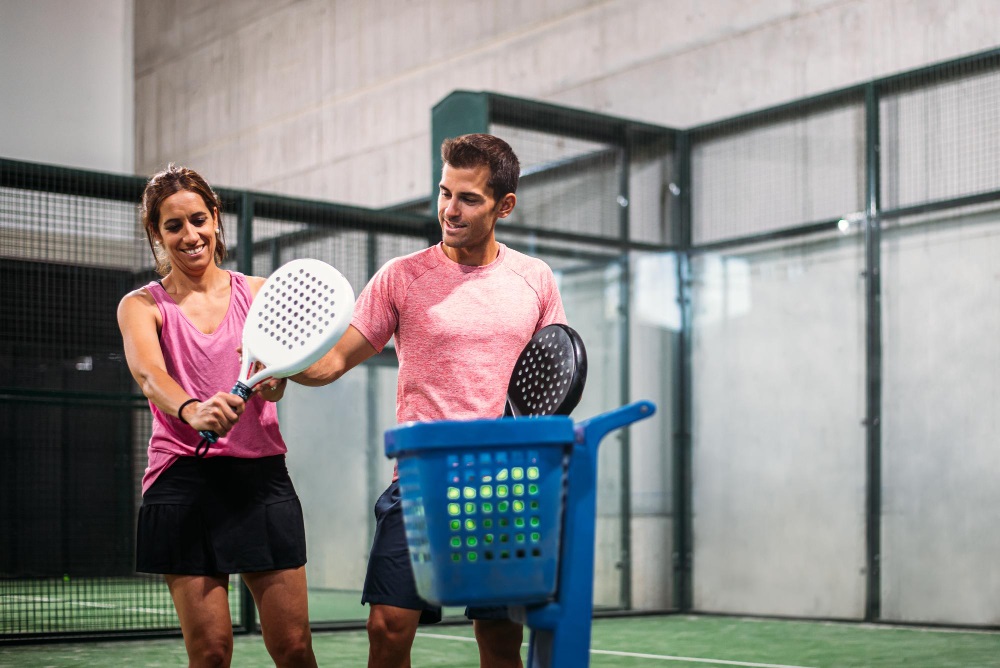
  • Padel Coaching in the UK

    Who’s Teaching Britain’s Fastest-Growing Racquet Sport?
    Britain is in the grip of a racquet revolution. Over the past five years, padel has moved from the margins of the sports landscape to the mainstream, with clubs across the UK reporting unprecedented growth in participation, court construction, and competitive entry. But as thousands of newcomers take up padel each month, one question looms larger than any other: who is coaching them?

    With more than 600 padel courts now open across England, Scotland and Wales—and a further 200 projected by the end of 2025—the demand for qualified instructors has surged well beyond current supply. And for those seeking to progress from casual rallies to strategic gameplay, padel coaching is not a luxury—it’s a necessity.

    This article explores the evolving world of padel coaching in the UK, from instructor qualifications and training pathways to lesson costs, regional availability, junior programmes, and market growth forecasts. With insight drawn from the Lawn Tennis Association (LTA), Sport England, private coaching academies and 2025 industry data, we examine how Britain’s fastest-growing sport is building a framework to support its players—and whether it’s keeping pace.

    The Coaching Gap: Demand Outstripping Supply
    In 2019, padel was still a niche sport in Britain. Fewer than 20 LTA-qualified coaches were operating across the country, mostly in high-end private clubs or expat-led venues. Fast-forward to June 2025, and the coaching picture has changed dramatically—though perhaps not fast enough.

    According to the LTA’s latest Padel Report, published in May 2025:

    The UK now has over 460 officially licensed padel coaches

    A further 180 candidates are currently undergoing qualification

    38% of active padel clubs report a “shortage” of available coaching staff

    In some regions, such as the North East and parts of Wales, no LTA-certified padel coaches are locally available

    The surge in player numbers has caught much of the coaching ecosystem off guard. While tennis benefits from decades of investment in coaching frameworks, padel has had to develop its system from scratch. The LTA only began formal padel coaching certification in 2021, and many facilities still rely on multi-sport coaches or Spanish-speaking instructors operating without British accreditation.

    As a result, waiting lists for lessons are growing. In London, Manchester, Birmingham and Edinburgh, major padel clubs now report up to six-week delays for beginner and intermediate coaching sessions. Some facilities have resorted to rotating instructors from other regions or doubling up group sizes, compromising lesson quality.

    What Does It Take to Become a Padel Coach in Britain?
    The LTA’s pathway for padel coaching in 2025 is built on a tiered structure, similar to tennis. It aims to ensure consistency, technical accuracy, and progression from entry-level teaching to performance-focused instruction.

    There are currently three main tiers:

    Padel Instructor (Level 1) – 3-day intensive course designed for assistants, volunteers and community coaches. Cost: £250–£350.

    Padel Coach (Level 2) – 5–6-day programme with practical assessment. Enables full lesson planning and junior group sessions. Cost: £750–£950.

    Senior Padel Performance Coach (Level 3+) – Designed for advanced instruction and competitive player development. Cost: £1,500+ (limited availability; invitation-only)

    As of June 2025, Level 1 and 2 courses are offered in 14 centres nationwide, including LTA facilities in Roehampton, Nottingham, Leeds, Glasgow, and Bristol. The governing body plans to roll out new hubs in Norwich, Cardiff and Newcastle later this year.

    For foreign coaches—particularly those trained in Spain or Argentina—conversion to LTA certification involves an “accreditation bridging” programme, launched in partnership with the International Padel Federation. This ensures players receive instruction grounded in both global best practice and UK safety compliance.

    How Much Does Padel Coaching Cost?
    As with court access, coaching prices in Britain reflect demand, location, and infrastructure.

    Typical padel coaching rates in the UK (as of June 2025):

    Coaching Type Price Range (Per Hour)
    Private 1-to-1 session £45 – £75
    Group session (3–6 players) £15 – £30 per player
    Junior coaching session £10 – £18 per child
    Weekly academy programme £120 – £180 per month

    In London and the South East, prices are often at the higher end, with coaches charging upwards of £80/hour for advanced training or off-peak availability. Some coaches also offer bundle packages or subscription models, reducing per-session costs for regular clients.

    Coaching in regional towns is more affordable, with group sessions as low as £10 per player in Nottingham, Sheffield or Cardiff. However, availability is often limited, and competition for beginner spaces remains high.

    Many clubs are now introducing tiered coaching programmes, where players are assessed and placed in ability bands to streamline progression and match-up potential. This is especially popular in David Lloyd Clubs, Padel4All centres, and clubs affiliated with Game4Padel.

    Junior Development: The Next Frontier
    Padel may be a game for all ages, but its long-term future depends on a strong junior pipeline—and in this area, coaching is critical.

    The LTA’s Padel Youth Start initiative, modelled on the successful Tennis Youth programme, was expanded to padel in early 2024. It now operates in 51 schools and 22 dedicated padel academies across the UK. The programme provides:

    Weekly coaching for 6–12-year-olds

    Loan equipment and child-sized racquets

    Mini-court formats and modified scoring

    Progression certificates and local inter-school tournaments

    In 2025, nearly 9,500 children participated in Padel Youth Start, up from 3,100 in 2023. The LTA is targeting 20,000 juniors by 2026.

    But access remains uneven. While some regions (e.g. London, Surrey, Hertfordshire) boast multiple padel coaching academies for children, others—particularly in the Midlands and North East—lack qualified staff or facilities. Without a national curriculum or universal school access, the sport risks becoming regionally skewed.

    The Role of Private Academies and Independent Coaches
    While the LTA provides the overarching framework, much of the real-world padel coaching in Britain is delivered by private operators. These include:

    Game4Padel – A rapidly growing chain with courts and coaching in over 30 venues. Offers structured beginner and intermediate programmes.

    Padel4All – Known for grassroots engagement and inclusive coaching in Bristol, Swindon, and Southampton.

    The Padel School – UK-based international coaching academy offering video tutorials, clinics, and elite mentoring.

    Premier Padel Coaching UK – Offers advanced training and tournament preparation for semi-professionals.

    These providers are helping bridge the gap between beginner interest and competitive progression. However, coaching styles, pricing models, and teaching quality vary widely between them. Some use LTA-certified staff exclusively; others rely on internationally trained coaches working under transitional arrangements.

    To support quality control, the LTA launched its Coach Finder Portal in March 2025. This national directory allows players to search by location, availability, qualifications and specialisms. Feedback so far has been positive, with over 17,000 searches logged in the first 90 days of launch.

    Online Coaching: A Rising Supplement
    As with many sports post-pandemic, online resources are playing an increasing role in padel instruction. UK players can now access:

    Video tutorials (YouTube, Instagram, The Padel School)

    Remote training apps with drills and challenges (Padel Coach AI, Smatch)

    Live Zoom coaching (particularly for strategy and match review)

    These platforms have made high-level padel concepts more accessible, particularly in regions where physical coaching is limited. However, most professionals stress that online coaching should supplement—not replace—on-court learning.

    With padel’s strategic nuance, wall control, and footwork patterns, nothing replicates real-time guidance. Nevertheless, a hybrid coaching model is emerging—and may help ease the national coaching shortage.

    Who’s Coaching the Coaches?
    As Britain prepares to host its first Premier Padel UK Open in 2026, pressure is mounting not only to train more players, but to ensure the coaching base is internationally competitive.

    In response, the LTA and International Padel Federation announced a Coach Education Exchange Programme, launching in September 2025. This will:

    Host visiting coaches from Spain, Sweden and Argentina

    Offer bursaries for British coaches to train abroad

    Develop UK-led coaching curriculum standards

    These steps aim to professionalise padel instruction further and ensure that British coaching develops its own voice—distinct from its continental origins, but aligned with global performance benchmarks.

    As head coach Tom Parkes of The Padel School explains:

    “We’re at a crossroads. British padel coaching has the passion, but now it needs scale. The next five years are about turning interest into infrastructure.”

    The Business of Coaching: A Growing Profession
    For those entering the coaching world, padel presents an attractive opportunity. Coaches are in demand, earning decent fees, and enjoying a sport that’s growing in prestige.

    As of June 2025:

    Full-time padel coaches in London earn £30,000–£45,000 annually

    Independent regional coaches can generate £20,000–£35,000 with part-time hours

    Elite coaches with academy roles or sponsorship deals can exceed £60,000+

    With padel being less physically taxing than tennis over long hours, it also attracts coaches transitioning from other racquet sports. The LTA offers conversion training for qualified tennis coaches, with more than 140 having already switched disciplines since 2022.

    Padel coaching is also attracting more women. While tennis coaching in the UK remains male-dominated, 32% of new padel coaches certified in 2024 were female—a trend expected to continue as padel becomes a family-friendly, inclusive option for all age groups.

    What Players Should Look for in a Coach
    Choosing a padel coach in the UK is increasingly a question of quality over proximity. Key factors to consider:

    LTA Accreditation – Ensures insurance, safeguarding, and technical standardisation

    Experience level – Particularly for advanced players seeking strategic edge

    Teaching style – Group-focused? Technique-heavy? Game-based learning?

    Feedback mechanisms – Video analysis, written notes, session recaps

    Many coaches now offer free trial sessions or assessment games. With growing transparency and better digital platforms, players in 2025 are better placed than ever to make informed decisions.

    Conclusion: Coaching as the Backbone of Britain’s Padel Future
    Padel’s growth in the UK has been rapid, exciting, and undeniable. But sustaining that momentum—especially at intermediate and competitive levels—depends on building a robust, professionalised coaching ecosystem.

    The strides made since 2020 are significant: hundreds of certified instructors, new junior pathways, digital support tools, and regional coaching networks. Yet challenges remain: access gaps, pricing concerns, inconsistent delivery, and regional disparities.

    As Britain looks ahead to 2026—with new clubs, pro tournaments, and a million projected players—coaching will determine not just how many people play padel, but how well they play.

    In this, coaching is not an optional extra. It is the foundation on which the sport’s future rests.

    Financial Disclaimer: The information provided in this article is for general informational purposes only and does not constitute financial advice. While every effort has been made to ensure the accuracy of the content, market conditions may change, and unforeseen risks may arise. The author and publisher of this article do not accept liability for any losses or damages arising directly or indirectly from the use of the information contained herein.

    Copyright 2025: Tennispadel.uk
    Picture: freepik.com

  • Is There A Padel Tennis Dress Code?

    Unpacking the Padel Dress Code in Modern Britain
    As Britain’s padel boom continues to gather momentum — with more than 190,000 regular weekly players and over 680 operational courts — a quieter question is beginning to echo through the glass walls of clubs nationwide: what exactly should one wear on court?

    Padel has always presented itself as a sport of accessibility, blending tennis’s finesse with squash’s spatial intensity. But while its gameplay breaks tradition, its evolving aesthetic is anything but accidental. With brands investing, clubs codifying, and players seeking both performance and style, the padel dress code is no longer just an afterthought — it’s becoming a structured pillar of the sport’s identity.

    Yet despite its rising visibility and commercial appeal, padel remains sartorially fluid. There is no strict international dress code mandated by governing bodies like the FIP (International Padel Federation) or even the LTA (Lawn Tennis Association) for amateur players. Instead, a subtle but firm consensus is forming around club-level standards, safety requirements, brand partnerships, and social expectations.

    From Tracksuits to Techwear: A Style in Transition
    Historically, padel emerged from Spanish leisure clubs in the 1970s, where the dress code resembled that of casual tennis or weekend squash: cotton polos, gym shorts, and basic trainers. But the game’s explosion in popularity — particularly among fashion-conscious millennials and Gen Z — has catapulted it into the centre of the athleisure conversation.

    As of 2025, UK retail data from Sport Insight Group reveals a 240% year-on-year growth in padel-specific apparel sales. Brands like Adidas, Babolat, Bullpadel, and Nox now offer full padel clothing lines — featuring ventilated skirts, motion-stretch shorts, anti-chafe base layers, and sweat-wicking quarter zips.

    Clubs are increasingly adopting “recommended kit” guidelines, particularly in metropolitan venues with higher footfall. While few impose hard restrictions, most encourage:

    Padel-specific shoes (non-marking soles, lateral support)

    Athletic tops (no sleeveless vests for men, no halter tops for women)

    Court-safe shorts or skirts (no denim, cargo, or external zips)

    Optional visors or headbands for outdoor courts

    According to a June 2025 survey by PadelClub UK, 67% of facilities now issue written guidance on court attire — up from just 31% in 2023.

    The Safety Factor: When Dress Becomes Duty
    Beyond aesthetics, the shift toward formalised attire is being driven by performance and injury prevention. Padel’s enclosed court and fast-paced volleys place unique demands on footwear, limb mobility, and sweat control.

    Medical data from the British Journal of Sports Medicine (2025) highlights that:

    29% of padel-related slips and ankle sprains occurred in players wearing non-court shoes.

    Players wearing non-breathable cotton shirts reported a 22% higher incidence of heat rash and fatigue symptoms.

    Compression sleeves, worn by 18% of intermediate players, have been shown to reduce soft tissue strain during extended rallies.

    It’s not just injury. Courts themselves are at stake. Synthetic turf surfaces can degrade quickly when abrasive or inappropriate footwear is used — prompting venues to add signage and even impose fines for players wearing standard trainers.

    Leading insurers including Zurich Sport+ and Aviva Padel Protect now require clubs to demonstrate visible dress safety policies to remain compliant with liability cover. This often includes posted signage at court entrances and mention of footwear expectations in booking confirmations.

    Price Tags and Perception
    While some have raised concerns that dress expectations could become exclusionary, most clubs and brands have sought to keep entry-level kit affordable. According to Decathlon UK and ClubPadel Retail, the current median price range for padel gear is:

    Performance top: £16–£38

    Moisture-wicking shorts/skirt: £20–£45

    Padel-specific shoes: £50–£90

    Compression arm sleeve: £12–£22

    Branded socks (4-pack): £9–£14

    In contrast to tennis, which still clings to all-white codes at prestigious venues, padel allows colour, branding, and hybrid styling — part of its broad appeal. Many players incorporate their padel gear into their daily athleisure wardrobe, further blurring the line between sport and lifestyle.

    Sponsorship, Branding and the “Look” of Padel
    As padel grows, so does its corporate footprint. Brands are no longer just supplying bats and balls; they’re actively shaping the image of the sport through sponsorship deals and influencer partnerships.

    In 2025, Babolat UK signed a multi-year apparel deal with the Premier Padel League, outfitting players and officials in coordinated kits designed for both comfort and brand visibility. Meanwhile, clubs like The Glass Court Society (Brighton) and UrbanPadel London have partnered with Lululemon, Castore, and even Gymshark to create co-branded merchandise lines.

    According to the UKActive Leisure Report (Q2 2025):

    71% of under-30 players say “looking good on court” enhances their experience.

    54% have purchased branded padel gear within the past three months.

    39% say they would avoid clubs without clear dress guidance due to peer pressure or aesthetic expectations.

    These statistics reflect a wider social shift. In the age of TikTok, Reels and fitness influencers, visual consistency and brand affiliation now influence where people play — not just how.

    Gendered Expectations and Inclusivity
    Padel’s clothing evolution is also navigating modern gender discourse. While men’s gear trends toward unisex cuts and darker palettes, women’s ranges have diversified significantly — introducing everything from performance skorts and breathable dresses to arm covers for modesty.

    The LTA has made clear its expectation for gender-neutral dress policy enforcement, after reports of discriminatory enforcement at one private club in the Midlands. In response, the UK Padel Federation released voluntary guidance recommending:

    No gender-based restrictions on length or colour

    Acceptance of religious clothing if safe and court-appropriate

    Inclusive sizing stocked by all affiliated retail partners

    These inclusivity measures are now echoed by leading suppliers. For example, StarVie UK has expanded its women’s range to 3XL and introduced a modestwear capsule collection in collaboration with British-Muslim Sportswear Alliance (BMSA).

    Regulation on the Horizon?
    At the moment, there’s no FIP-mandated international dress code for amateur players. However, for tournament play — especially in Premier Padel Tour or British Padel Federation (BPF) sanctioned events — certain requirements apply:

    Matching team kits for doubles

    Player ID numbers displayed on the upper back

    No visible political or offensive symbols

    Sponsor visibility zones on front/right sleeve

    Officials say a more codified approach is under review, especially as padel edges closer to Olympic inclusion. The LTA Padel Performance Division is working with the Department for Culture, Media and Sport (DCMS) to develop unified national guidance for youth leagues, school programmes and club tournaments.

    This would likely follow a model similar to netball or club-level tennis — firm recommendations without exclusionary enforcement, aimed at equality, safety, and professionalism.

    Cultural Variations and Club Etiquette
    Across Britain, dress code enforcement varies with club culture. Central London and affluent South East venues tend to maintain stricter visual codes — often for brand reasons. In contrast, community clubs in Greater Manchester, the Midlands and Scotland report a more relaxed approach.

    Still, even the most casual venues are now discouraging:

    Denim or cargo shorts

    Crop tops without sports bras

    Barefoot play or non-court shoes

    Wet clothing or swimwear

    High-contrast reflective clothing (indoor play)

    This club-led evolution is less about rules and more about a shared aesthetic experience. As one club owner put it, “It’s not Wimbledon whites, but padel has a look now. And most players want to be part of that.”

    Youth, Schools and Standardisation
    Padel’s integration into school sport has brought the question of uniformity into sharper focus. Over 160 secondary schools across the UK now include padel in PE, thanks to the Padel4Schools initiative, jointly backed by the LTA and Sport England.

    Uniform expectations vary by school, but there is consensus on safety and mobility:

    Shorts or skorts (no jeans or tight leggings)

    Court shoes with ankle support

    High-visibility tops for refereeing rotation

    Branded bibs for intra-school competitions

    Retailers such as Tennis Nuts, Decathlon Schools, and YouthSport Direct have begun producing discounted school packs, with subsidised pricing under the LTA’s community sports grant scheme.

    Future Fashion or Function First?
    As padel continues to evolve — from late-night hobby to national sport — its dress code reflects a wider convergence of utility, identity and commerce. For now, most British players are content to follow loose club guidelines and prioritise comfort and grip.

    But with brands leaning into padel’s global momentum, and clubs seeking to curate consistent experiences, a more standardised aesthetic seems inevitable. That doesn’t mean uniformity — but it does mean thoughtfulness.

    “Padel’s dress code is what tennis would be if it were invented in 2020,” says Leanne Ford, editor at UK SportStyle Weekly. “Practical, expressive, branded — but not rigid. That balance is its edge.”

    Financial Disclaimer: The information provided in this article is for general informational purposes only and does not constitute financial advice. While every effort has been made to ensure the accuracy of the content, market conditions may change, and unforeseen risks may arise. The author and publisher of this article do not accept liability for any losses or damages arising directly or indirectly from the use of the information contained herein.

    Copyright 2025: Tennispadel.uk
    Picture: freepik.com

  • Is Padel Harder Than Tennis?

    Britain’s Racquet Debate in Full Swing
    In a country that worships its Wimbledon traditions and still clutches tightly to its Slazenger roots, the racquet sport insurgency that is padel continues to rattle the net. The question on many lips across Britain’s leisure clubs, schools, and city rooftop courts in 2025 is no longer what is padel?—it’s is padel harder than tennis?

    While on the surface they seem similar—two racquet sports with bouncing balls, volleys, smashes, and doubles play—the distinctions between tennis and padel are not only technical but philosophical. As padel grows at lightning pace in the UK, the debate about which game demands more is fuelling a nationwide sporting conversation.

    Britain’s Fastest Growing Sport? The Numbers Speak
    It’s hard to ignore the figures. Padel has officially become the UK’s fastest-growing sport. In 2019, there were barely 90 courts across the entire country. Fast forward to June 2025, and Sport England confirms there are now over 600 operational courts—a sixfold increase, with a further 200 scheduled to open by next summer.

    Fuelled by investment from private equity-backed operators such as Game4Padel and club giants like David Lloyd Leisure, the boom is also visible in kit sales. Retailers including ProDirect and Padel Shack report a year-on-year increase in racquet sales of over 35%, and brands like Bullpadel, Adidas, and Wilson are rapidly expanding UK product lines. A top-tier padel racquet now costs between £150 and £250, while even entry-level models hover around £100—a sign that this is no longer a fringe activity.

    In contrast, tennis remains structurally dominant. The Lawn Tennis Association (LTA), which also governs padel in the UK, oversees more than 23,000 tennis courts, with decades of infrastructure behind it. Coaching, tournaments, and professional pathways are deeply embedded.

    And yet, the latest LTA statistics show that one in every three new racquet sport participants in 2025 chose padel over tennis.

    The Technical Divide: Bounce, Power, and Brains
    When asking whether padel is harder than tennis, it depends who you are and where you stand—literally. On the surface, padel is more accessible. The underarm serve, smaller court (20 x 10 metres), and rebound walls make it a gentler learning curve. Beginners often manage a rally within their first session.

    But this accessibility conceals complexity. Padel is a game of angles, rebounds, and anticipation. Unlike tennis, where power often wins, padel is won in the mind. The best players don’t overpower; they out-think, placing shots that rebound awkwardly off the glass or teasing with lobs that lure opponents out of position.

    Tennis, meanwhile, is a test of explosive athleticism. Serves can exceed 130mph in elite men’s matches. Singles players must master footwork, spin, depth control, and serve variations. There’s a reason Novak Djokovic trains daily just to maintain endurance levels across five-set matches.

    Dr Iain Murray, a sports biomechanics expert at Loughborough University, notes:

    “Tennis is more physically punishing, but padel is more cerebrally demanding. Reaction time, positional intelligence, and anticipation are far more prominent in padel.”

    So what’s harder? For newcomers, padel is easier to enjoy. For those climbing the skill ladder, both sports offer Everest-level challenges—but with very different terrains.

    The Economics of Racquet Sports in 2025
    Let’s not forget the wallet. Sport in Britain is increasingly a cost-benefit decision.

    A one-hour tennis court rental in a public park averages £10 to £20. Club courts or indoor venues can rise to £40. Coaching costs vary widely but tend to fall between £35 and £70 per hour for accredited instructors.

    Padel, by contrast, is more premium—at least for now. Courts are fewer, mostly private, and often require membership. At David Lloyd, Virgin Active, or Padel4All venues, hourly padel court hire averages £35 to £50, with evening peak slots pushing towards £60 in London and Manchester.

    Coaching is also in demand. As of June 2025, the LTA has licensed more than 400 qualified padel coaches nationwide, up from just 56 three years ago. Fees range between £25 and £60 per hour, and court fees are often additional.

    Shoes, racquets, and balls also differ. While tennis balls (pack of 4) cost around £7, padel balls, designed with lower compression, retail for £6 to £10 but lose bounce faster, increasing replacement costs.

    To weigh the true difficulty of each sport, players must also consider the financial effort. And with padel’s popularity exploding, many clubs now enforce booking limits due to court scarcity—a sign of just how in demand the sport has become.

    Who Finds What Harder?
    This is where the conversation turns deeply subjective. For tennis veterans, padel can seem like a breath of fresh air—shorter rallies, less brutal movement, and doubles by default. But underestimate it, and the tactical depth will quickly punish you.

    Conversely, for padel regulars switching to tennis, the struggle often lies in timing, power generation, and solo court coverage. Padel’s walls create controlled chaos; in tennis, there is no safety net—miss the line and you’re out.

    A 2024 study published by the British Journal of Sports Medicine found that:

    61% of tennis players found padel easier to pick up

    47% of padel players found tennis more physically draining but less tactically stressful

    Mixed racquet sport athletes ranked padel higher for strategy, and tennis higher for physicality

    Both sports build cardiovascular fitness, co-ordination, and reaction speed, but they ask different things of your brain and body. A padel rally might last 15–20 shots due to slower pace and defensive walls. A tennis rally may be over in three brutal forehands.

    Strategy: Padel’s Hidden Intensity
    The strategic mind-game of padel is often underappreciated. A slow lob can be more devastating than a smash. A sliced backhand passed deliberately to rebound off the side wall can change the rhythm of a rally in an instant. Doubles positioning becomes a game of geometry and psychological warfare.

    The uninitiated might scoff: “It’s just tennis in a box.” But that box transforms the sport entirely.

    Unlike tennis, where power and speed dominate, padel rewards patience, observation, and team chemistry. It forces players to resist impulse, to delay the killer shot, and to understand opponent weaknesses. Every mistake is magnified by the confined court.

    Andy Bourne, a Level 3 LTA Padel Coach and former tennis pro, explains:

    “Padel looks easy at first, but once you face a pair who know how to use the walls and control the net, it becomes like chess on turf. You’re punished for overplaying.”

    The walls are not gimmicks—they are weapons. Used well, they turn defence into attack. Used poorly, they end rallies. That alone makes padel challenging in a uniquely frustrating way.

    Professional Circuits: The Pressure of Performance
    The professional tennis scene is a global colossus. ATP and WTA players compete for millions, with Grand Slam winners earning seven-figure sums. But below the top 100, many scrape by, spending most of their earnings on travel, training, and physiotherapy.

    Padel, on the other hand, is still finding its commercial footing. The recent unification of Premier Padel and the World Padel Tour (WPT) into one circuit in 2024 has created a more coherent calendar and prize structure. Yet average tournament purses remain lower—£100,000 to £250,000 at top-tier events.

    Still, in the UK, professional padel is gaining serious traction. Padel England reports a 37% rise in competitive tournament entries in 2024–2025, and brands such as Wilson and Nox are now offering direct sponsorship deals to up-and-coming British players. Sky Sports is expected to announce broadcast rights for the 2026 WPT UK Open in Manchester.

    Professional difficulty? Tennis is more gruelling, physically and financially. But padel’s climb is steeper for now, and its tactical elite will only sharpen as funding improves.

    A Cultural Shift: Why Britain is Gravitating to Padel
    Perhaps the deeper question isn’t whether padel is harder—but why it’s happening now. The answer lies partly in the post-pandemic shift towards social, outdoor, and fast-gratification sports.

    Padel is inherently social. You play doubles. You share the load. Rallies last longer, and the learning curve is softer. This makes padel far more inviting for time-pressed professionals, older players, and families alike.

    Its cultural rise is also underpinned by accessibility. LTA’s latest data shows that 45% of new padel players had never played a racquet sport before. Many cite the sport’s friendliness and faster satisfaction rate.

    That, in itself, is redefining what “hard” means in a sport. If the barrier to entry is too steep—tennis’s solo play, its steep technique climb—people will simply look elsewhere.

    Padel, by being accessible but layered with challenge, is offering Britain both fun and complexity. It’s not a rival to tennis; it’s a complement. And that may be the secret to its unstoppable rise.

    Final Whistle: So, Which One’s Harder?
    The verdict? It depends on your lens.

    If you’re measuring power, endurance, and technical load—tennis wins. If you’re weighing strategy, positioning, and anticipation—padel takes the point.

    But here’s the rub: both sports push players, just in opposite directions. Neither is universally harder. Both can be fiercely difficult. And each is growing more loved by the day.

    In the end, the better question may not be which sport is harder, but which one suits your game, your goals, and your style.

    And in 2025 Britain, you’re spoilt for choice.

    Financial Disclaimer: The information provided in this article is for general informational purposes only and does not constitute financial advice. While every effort has been made to ensure the accuracy of the content, market conditions may change, and unforeseen risks may arise. The author and publisher of this article do not accept liability for any losses or damages arising directly or indirectly from the use of the information contained herein.

    Copyright 2025: Tennispadel.uk
    Picture: freepik.com